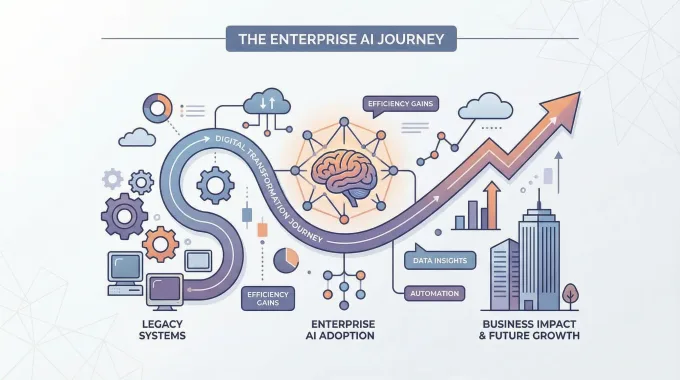
Gartner: Just 4% of CIOs Are Redesigning Roles for AI Agents — Why Workforce Planning Lags Adoption
HR Dive Oct 23: Gartner 2,002 CIOs, 4% revamping roles for agents, 58% asked for cost cuts. Automation World: 40% of agentic projects dead by 2027.


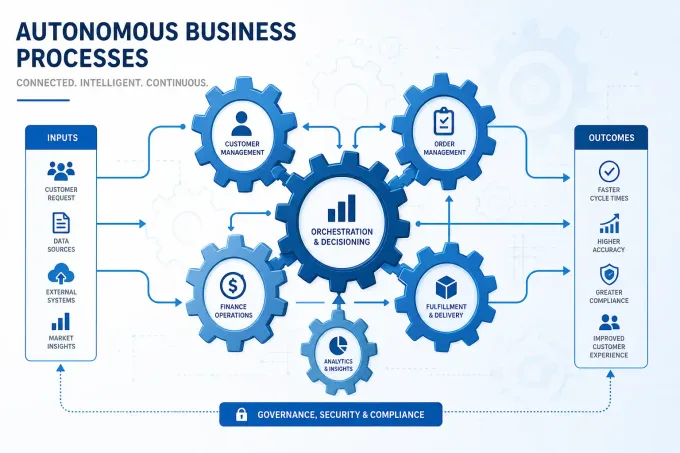
InformationWeek Oct 19: 13% of CIOs report significant AI value; spend is 18-fold. CIO Oct 20: Mead Johnson's S/4HANA landed in 11 months. A flywheel is not a cutover.
InformationWeek: Microsoft's 1,725-leader survey puts unsanctioned agents near 3 in 10. SumatoSoft: 25.6% of live deployments run unattended. A case study is not a ticket.
ServiceNow launched AI Workflow Factory in Mumbai on October 6. McKinsey still has about 37% of firms tying AI to EBIT. Diagnose the decision gap first.
Autoheal's Healer writes prompt diffs into Git. Meta launched an enterprise platform the same week Workplace died. Microsoft says attackers already shrank the window to minutes.
CIO.com’s Client Zero pitch is internal-first AI. Boston’s CIO 100 said execs trust demos. Fabric said agent count is the wrong scoreboard.
Worldwide AI spend jumps 49.5% to $2.7 trillion in 2026. Agents are the 77.3% line. Capital One spent 14 years on the stack. SAP tied agents to Signavio on Sep 22.
Fortune says CIOs are racing to cage agents that already take initiative. Deloitte still has 75% using some agentic AI. Salesforce will run Hyperforce on Google Cloud in November.
Gartner says 40% of enterprise apps will embed agents by year end. PagerDuty's CIO says the job is deciding where that software may move without a person.
Google Cloud is training a thousand Accenture FDEs for Gemini Enterprise. The pitch is transformation. The tell is that the platform still needs babysitters.
From contract review to invoice processing, AI document tools are cutting processing time by 70%. Here is what is actually working and what still needs human oversight.
97% of logistics executives call AI a strategic priority. Only 13% say it's delivering measurable financial impact. New research from BCG and Everest Group explains the gap — and why the timeline most companies are working with is wrong.
30,000 employees, one platform, measurable results. A case study on what makes enterprise AI adoption actually work.
Gartner predicts 40% of agentic AI projects will be cancelled by 2027. Here's the governance gap putting enterprise digital transformation at risk — and what smart companies are doing about it.

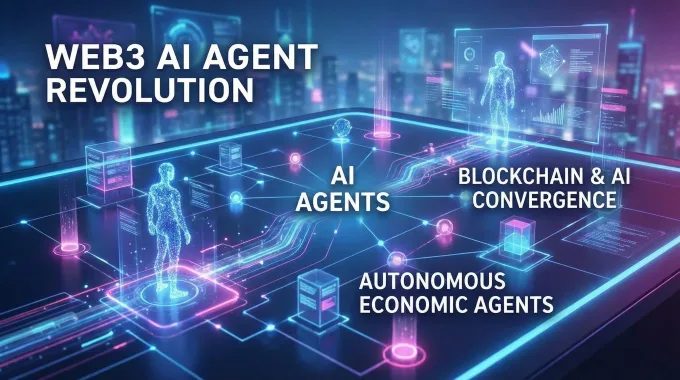
Most companies jump from strategy decks to full AI deployment and wonder why nothing works. Intelligent automation fills the gap between ambition and results.
The data gap between AI spending and measurable results is reshaping who controls AI budgets. CFOs are taking over, and proof-of-concept projects are running out of time.
As enterprises shift from AI proof-of-concepts to enterprise-wide deployment in 2026, the cloud adoption journey from a decade ago offers a surprisingly accurate roadmap — including the mistakes to avoid.
57% of enterprises have AI in production. But only 23% of leaders think their workforce is ready. The gap between deployment and preparedness is the real story of 2026.
Enterprise AI adoption is near-universal, but measurable transformation remains elusive. A deep dive into the governance, workforce, and strategy gaps separating AI winners from everyone else.
Two years into the generative AI boom, enterprises are done experimenting. The conversation has shifted from 'what can AI do?' to 'how do we make it actually work at scale?' The answer, increasingly, is agentic architectures — systems that don't just assist humans but act on their own. Here's what real-world deployment looks like, where it's breaking, and which tools are earning their seat at the table.
For two years, AI adoption was driven by engineers and early adopters. The 2026 shift is different: CEOs and boards are now the ones pushing for transformation, and their expectations don't match the engineering reality.
As the EU AI Act's first enforcement deadline approaches and U.S. state-level AI laws multiply, enterprises are racing to build governance frameworks that satisfy regulators without paralyzing innovation. Here's what's working.
Edge AI has moved from pilot projects to production deployments across enterprises. We examine how distributed inference, on-device training, and hybrid cloud-edge architectures are reshaping how organizations deploy and manage artificial intelligence.
Adobe's 2026 survey of 7,000 people reveals a growing gap between what agentic AI can deliver and what enterprises are structurally ready to deploy. Here is how leading companies are closing it.
Most enterprise AI pilots never reach production. Here is why the transformation gap exists, what it costs, and what companies that bridge it are doing differently.
A new wave of enterprise platforms is treating AI agents as managed workers — complete with job roles, budgets, permissions, and audit trails. This is the next phase of digital transformation.
From processing benefits applications to optimizing public transportation, AI is quietly reshaping how governments serve citizens. Here's where the technology is working, where it's failing, and what responsible government AI deployment looks like.
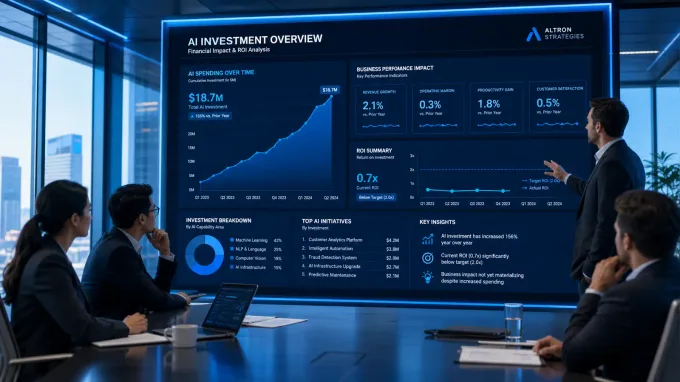
Companies are spending billions on AI, but measuring the return remains surprisingly difficult. From productivity gains to revenue growth to competitive positioning, here's how leading organizations are quantifying AI's business value — and why traditional ROI frameworks fall short.
From satellite-powered crop monitoring to autonomous tractors, AI is transforming agriculture. Here's how machine learning is helping farmers increase yields, reduce chemical use, and adapt to climate change — and why adoption is still uneven.
From traffic optimization to energy management, AI is becoming the operating system of modern cities. Here's how municipalities worldwide are deploying AI to improve services, reduce costs, and enhance quality of life — and where they're hitting obstacles.
AI isn't just automating tasks — it's fundamentally reshaping what jobs look like. From the rise of 'AI supervisors' to the premium on uniquely human skills, here's how organizations and workers are adapting to the most significant labor market disruption in decades.
After decades of promises about technology-enabled personalized education, AI is delivering on the vision. From adaptive tutoring systems to automated grading, here's how AI is reshaping classrooms and what it means for teachers and students.
From fraud detection that catches patterns humans miss to robo-advisors managing billions in assets, AI is reshaping every corner of financial services. Here's where the technology is delivering real value — and where regulators are pumping the brakes.
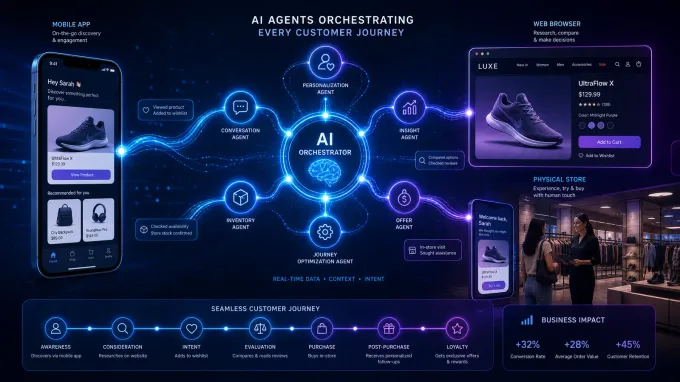
From conversational AI agents that resolve complex issues to predictive support that solves problems before customers notice, AI is fundamentally reshaping customer service. Here's what's working, what's costing jobs, and where humans still matter.
Digital twin technology, powered by AI, is moving beyond simulation into real-time optimization of factories, supply chains, and product lifecycles. Here's how manufacturers are using virtual replicas to cut costs and boost quality.
From demand forecasting to autonomous warehousing, AI is transforming every link in the supply chain. Here's what's working, what isn't, and where the biggest ROI lives.
Discover how AI search optimization, answer engine optimization (AEO), and Web3 infrastructure are reshaping business models in 2026. Learn practical strategies for CEOs and digital leaders to scale profitably in the AI-driven economy.
Two technologies that spent years in separate corners are finally talking to each other. Analyzing how AI and blockchain convergence is solving real problems around trust, automation, and verification.
The era of AI pilots is over. Learn how leading organizations are moving from experimentation to production-grade AI deployment, achieving measurable ROI, and building competitive advantages that reshape their industries.
An overview of AI agents on blockchain: payment protocols, agent identity standards, real use cases, and the infrastructure gaps that remain. Not investment advice.
Explore how AI is revolutionizing healthcare in 2025. From diagnostic tools to personalized medicine, discover the key trends reshaping the medical landscape.
Discover how Web3 and AI are converging to create a new era of decentralized intelligence. Explore the opportunities, challenges, and future of this powerful combination.