ARCHIVE DOSSIER // TOTAL: 47 DISPATCHES

LLM Research

Deep-dive analysis on foundation models, scaling laws, and inference architectures

SEC.03 / LLM Research

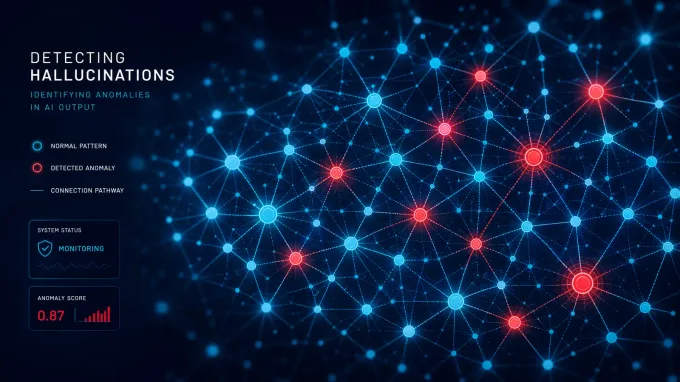
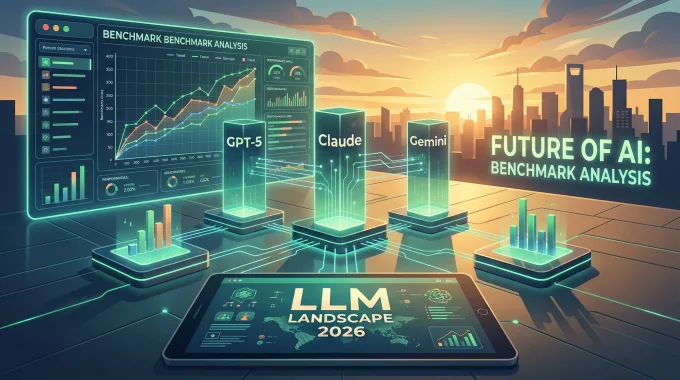
Abstract visualization of neural network nodes connected by glowing pathways, with some nodes highlighted in red to represent detected anomalies

How LLM Hallucination Detection Works: Attention Graphs (CHARM), Output Signatures (LOS-Net), Semantic Entropy and Practical Safeguards

A guide to detecting LLM hallucinations: white-box methods that read attention and activations (CHARM, ICLR 2026), black-box methods using output probability distributions (LOS-Net), sampling-based checks like semantic entropy and SelfCheckGPT, their limits, and the safeguards production systems should use.
SEC.03 / LLM Research
Nature Medicine Study: GPT-5.2, Gemini 3.1 Pro and Claude Opus 4.6 Beat OpenEvidence and UpToDate Expert AI, and Why the Result Is Disputed

Nature Medicine Study: GPT-5.2, Gemini 3.1 Pro and Claude Opus 4.6 Beat OpenEvidence and UpToDate Expert AI, and Why the Result Is Disputed

A June 2026 Nature Medicine study found three frontier LLMs outscored two specialized clinical AI tools on MedQA, HealthBench and real clinician queries. The results, the vendor pushback including a retraction demand, and what it means for enterprises choosing general models versus specialist AI.
SEC.03 / LLM Research
A sleek glass tower reflecting a network of interconnected data streams against a warm golden sky

Claude Fable 5 Explained: Anthropic's Public Mythos-Class Model, Safeguard Fallback to Opus 4.8, Pricing and Data Retention

Anthropic released Claude Fable 5 on June 9, 2026, a public Mythos-class model whose safeguards route flagged cyber, biology and chemistry requests to Claude Opus 4.8, alongside Mythos 5 for vetted Project Glasswing partners. Pricing, vendor-reported benchmarks, the 30-day retention policy and what developers should check.

SEC.03 / LLM Research
The Environmental Cost of AI: Training vs Inference Energy, Data Center Electricity, Water and What the Published Estimates Show

The Environmental Cost of AI: Training vs Inference Energy, Data Center Electricity, Water and What the Published Estimates Show

What is actually known about AI's environmental footprint: published training estimates for GPT-3 and BLOOM, Google's per-prompt inference figures, IEA projections for data center electricity, company emissions trends, efficiency gains, water use, and why standardised disclosure is still missing.

SEC.03 / LLM Research
Chain-of-Thought Reasoning Explained: From Step-by-Step Prompting to Trained Reasoning Models, Faithfulness and Practical Use

Chain-of-Thought Reasoning Explained: From Step-by-Step Prompting to Trained Reasoning Models, Faithfulness and Practical Use

How chain-of-thought reasoning evolved from a prompting trick (Wei et al., Kojima et al.) through self-consistency, Tree of Thoughts and ReAct to RL-trained reasoning models like o1 and DeepSeek-R1, where it helps, its limits, whether visible reasoning is faithful, and how to prompt reasoning models.

SEC.03 / LLM Research
Watermarking and Detecting AI-Generated Text: How Green-List Watermarks and SynthID Work, Their Limits, and Why AI Detectors Mislead

Watermarking and Detecting AI-Generated Text: How Green-List Watermarks and SynthID Work, Their Limits, and Why AI Detectors Mislead

How AI text watermarking works (Kirchenbauer et al.'s green-list scheme and Google DeepMind's SynthID Text), what research shows about paraphrasing and robustness, why style-based AI detectors are unreliable, EU AI Act Article 50 marking duties, and practical guidance for schools, publishers and platforms.