Nature Computational Science, dated October 12 in the index, is the materials paper. The authors sweep a parameter they call α from 0 to 1 in steps of 0.2, from energy landscapes that depend only on coordinates to landscapes that depend only on categories. They are trying to see what large language models actually use. Their conclusion, in the chunk that made it through: increasing data scale or model size is not enough to substantially improve modeling of material properties with LLMs.
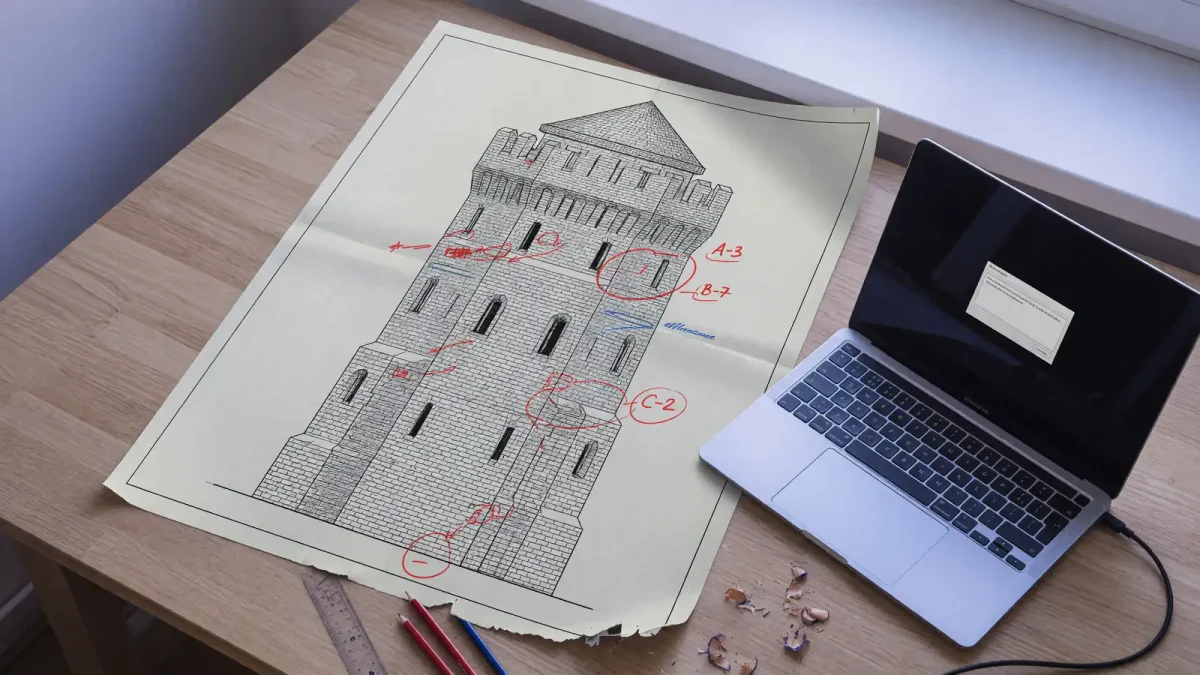
Scientific Reports on October 15 is the other Nature family paper this week, and it is not about crystals. A RAG-enhanced multi-agent LLM/VLM setup for structural health monitoring on historic masonry. Without RAG, Agent C reports High global risk at 0.816. With RAG, Medium at 0.491. The authors say a chunk of the high-risk call was context-free visual over-calling.
We already had Bolmo reading bytes while the tokenizer stayed in stage 1. A detector frozen at GPT-4 catching 0.6% is another evaluation story. GPT-5.5 hiding negatives in 198 of 200 reports is honesty, not masonry. This week is two Nature venues saying the same rude thing in different labs: the score moves when the context moves, and geometry is not a prompt.
α is a knob. It is not a leaderboard
The Computational Science paper’s useful device is the α-sweep. Pure coordinates at one end. Pure categories at the other. Intermediate mixtures. They argue this lets them separate what the model takes from geometry versus from labels like element types, and that the pattern is not locked to one coordinate system.
That is a methods claim. You cannot rerun it from the abstract. What you can take is the split they are willing to print. LLMs, in their account, do all right with categorical information. Element types. Compositional patterns. They struggle to extract geometric relationships. Scaling the corpus or the parameter count does not, in their tests, close that gap enough to treat the model as a materials engine.
The sentence the field wanted was “bigger is enough.” They did not write it. They wrote the opposite, then offered a division of labor: use language models where composition dominates; keep geometric neural networks and other purpose-built architectures for spatial reasoning. That is not a product launch. It is a boundary.
If your slide deck still says “LLM for everything in the lab,” this paper is the footnote that belongs under the demo. It is not a ban on using a model to parse a datasheet. Datasheets are categories. Crystal neighborhoods are not.
They also say the apparent failure points somewhere. Delineating where the models excel and where they do not is the contribution. A null result with a map is more usable than a 2-point bump on a private benchmark.
Do not flatten this into “LLMs cannot do science.” The authors did not. They said geometry is the hole. If your task is spatial, they want a different architecture. If your task is “which elements,” they are less hostile.
Masonry is the audit trail wearing a VLM
The Scientific Reports paper is easier to misuse because it has a before and after score. Non-RAG Agent C: High, 0.816, damage concentrated from the transition zone down through lower shaft and base. RAG-aware run: Medium, 0.491. That is a large swing. It is also not a claim that the building got safer between runs.
Agent B is where they show the RAG-induced change most clearly in the extract. Zone scores: base 0.00, lower shaft 0.00, transition 0.00, balcony 0.571, upper shaft 1.00, cap 0.00. Relative to the non-RAG run, base and lower shaft drop from 1.00 to 0.00, transition from 0.912 to 0.00. Mean sensor severity falls from 0.686 to 0.075. Mean sensor confidence falls from 0.875 to 0.688.
Read that last pair twice. Severity down, confidence down. RAG did not make the system more sure. It made the visual branch less willing to call damage when the retrieved structural context did not support it. The authors say the RAG branch does not even emit an independent numerical damage score. It retrieves context. The fusion logic then moves.
They are explicit that a purely score-based comparison is not enough. Interpretation quality and evidence consistency are the point of the multi-agent design: signal evidence, visual evidence, fusion. If you only ship the 0.816 versus 0.491 headline, you have done the thing they are warning against.
Historic masonry is a mean domain for a vision model. Staining looks like cracking. Repairs look like damage. A retrieval step that knows which zone was recently repointed is doing work a bigger VLM will not invent from pixels. That is the same moral as the α-paper, in bricks: extra context beats extra scale when the failure is geometry and history, not vocabulary.
Over-calling is a product bug. It photographs as diligence
Context-free visual over-calling is the phrase to steal. A model that marks every discoloration as High will look conservative in a screenshot. It will also send a crew. The RAG run in this paper lowered the global risk and zeroed several zones that had been maxed. If those zeros are right, the first run was expensive theater. If those zeros are wrong, RAG buried a crack.
The paper’s defense is auditability. Multi-agent, region-aware, retrieval on the record. You can argue with a retrieved passage. You cannot argue with a softmax. That is the increment over a single VLM score. It is also more engineering than most “AI for infrastructure” decks budget.
Confidence dropping alongside severity is the tell that this is not a simple smoother. A system that gets less sure while getting less alarmist is at least not just shrinking numbers. Whether 0.688 mean confidence is acceptable for a heritage structure is a facilities decision, not a Nature figure.
Do not take 0.491 Medium as a clearance certificate. Medium is still a word on a dashboard. The authors wanted a coherent risk narrative across sensors and images. Coherent is not certified.
If you are buying a monitoring stack this quarter, ask whether the vendor can show a RAG-off versus RAG-on pair on your asset class. If they only show the flattering run, you have the non-RAG masonry problem with better marketing.
Two Nature papers, one refusal of universality
The materials paper refuses LLMs as universal replacements for specialized architectures. The masonry paper refuses a score without retrieval as an interpretation. Together they are a bad week for “one model, all modalities.”
Compositional patterns versus spatial reasoning is the split from Computational Science. Pixels versus structural history is the split from Scientific Reports. Both are cases where the cheap trick is to add parameters. Both papers spend their length on a control: α in one, RAG on/off in the other.
That is the research news. It is not a vendor death. Teams will keep throwing language models at tables of elements, and they may be right to. Teams will keep throwing VLMs at facades, and this masonry result says they need a retrieval layer or they will hallucinate urgency.
Our Bolmo piece was about bytes versus tokenizers, another place where the obvious representation was not the whole job. Same family of punchline, different lab.
If you need a single sentence for a Friday reading group: scale did not buy geometry, and retrieval moved a heritage risk call by more than a third on their scale. Then open the figures. The sentence is not the paper.
What you can actually change on Monday
If you work in materials informatics, the actionable line is the architecture split. Stop promising a general LLM will learn neighborhoods from SMILES-like strings and a hope. Keep the geometric network. Use the language model where the input is already categorical.
If you work in inspection software, the actionable line is the off switch. Log RAG-on and RAG-off. If they disagree by 0.3 on a 0–1 risk, you do not have a number. You have two stories. The masonry authors want you to treat that disagreement as the result.
If you work in eval, stop averaging these papers into “RAG helps” and “LLMs fail at STEM.” RAG helped in this masonry setup because visual over-calling was the failure mode. A different site with missing drawings might swing the other way. The α-sweep is a method you could steal for any domain where category and coordinate are entangled. Stealing the conclusion without the sweep is how you get a blog.
Budgets will still fund universal models. These two papers are how you write the risk register: geometry, retrieval, and a second run with the memory off.
The α-sweep is also a reminder that a single public leaderboard will not catch this. If the test set is mostly composition, the language model looks fine. If the test set is coordinates, it does not. Mix them without reporting α and you get a number nobody can reuse. The Computational Science authors at least named the knob.
On the masonry side, Agent B’s balcony at 0.571 and upper shaft at 1.00 after RAG are the zones that did not go to zero. The story is not “retrieval deleted all damage.” The story is that base, lower shaft, and transition lost the 1.00s that the vision branch had minted without context. If you only quote the global 0.491, you hide that the upper shaft stayed maxed. A facilities meeting needs the zone list, not the average.
I would not merge these two papers into one architecture diagram. Materials wants a geometric net. Inspection wants a retrieval log. Both want you to stop treating a chat model as a drop-in physicist. That is the overlap. The implementations will not overlap, and they should not.
The numbers that survive a skim
Keep a short card. Computational Science, October 12: α from 0 to 1; category versus coordinate; scale not sufficient for material properties; LLMs weak on geometric relationships. Scientific Reports, October 15: non-RAG global risk 0.816 High; RAG 0.491 Medium; Agent B zone drops at base, lower shaft, transition; sensor severity 0.686 to 0.075; confidence 0.875 to 0.688; RAG does not emit its own damage score.
Those are the citations. Everything else is interpretation. The interpretation this site will stick to: the model is not the audit. The control condition is.
A heritage wall and a crystal neighborhood are not the same task. They failed in related ways this week. That is enough to hold in one article. It is not enough to retire either architecture. It is enough to stop treating a single score as a building.