Insight Opens an Agent Store for Enterprise AI Work
On 12 November 2026 Insight launched an Agent Store with 15 offerings, direct deployment, and a first named client. The release lists the agents. It does not publish an independent scorecard.


ServiceNow's AI Workflow Factory and Autonomous Engineer aim to automate process improvement. With McKinsey data showing only about 37% of firms see EBIT impact from AI, here are the questions and pilot design CIOs should use.
AI agents that propose changes to their own prompts, tools and models widen what counts as a software change. How to classify agent changes by business impact, how much evidence each needs, and how vendor trust and faster attacks fit into the same governance plan.
Client Zero means a company is the first real user of its own AI stack and governance. Lessons from CIO.com's Client Zero essay, CIO 100 Boston, and Microsoft Fabric on judging AI programs by cost and outcomes, not demos.
Cursor Cloud Agents can now execute in customer-controlled Cloudflare Sandboxes while Cursor keeps the agent loop. How the architecture works, what data still leaves your environment, setup requirements, security tips, and Cloudflare's related AI vulnerability service.
Accenture and Google Cloud formed a Gemini Enterprise business group with up to 1,000 forward deployed engineers. What FDEs do, why AI vendors keep adding them, what the published results show, and how CIOs should structure an FDE engagement.
97% of logistics executives call AI a strategic priority. Only 13% say it's delivering measurable financial impact. New research from BCG and Everest Group explains the gap — and why the timeline most companies are working with is wrong.
More than 30,000 Hyundai Motor and Kia employees, about 80% of the general workforce, actively use the H Chat Pro platform. A case study on the platform, governance and training choices behind that adoption.
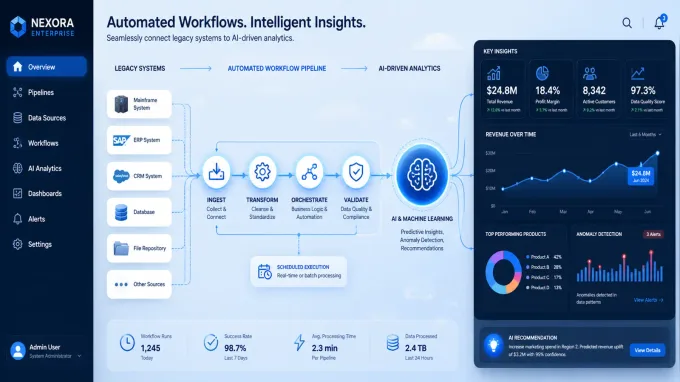
Most companies jump from strategy decks to full AI deployment and wonder why nothing works. Intelligent automation fills the gap between ambition and results.
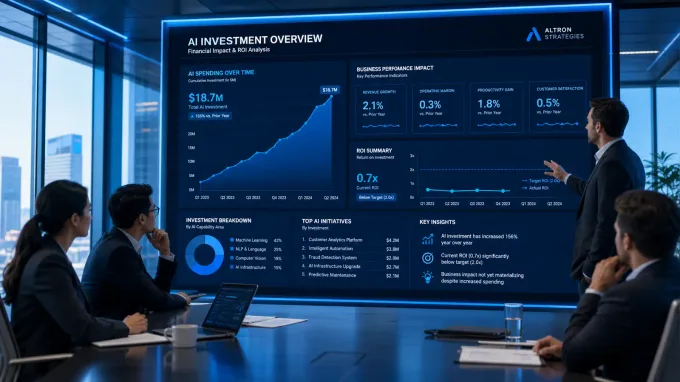
The data gap between AI spending and measurable results is reshaping who controls AI budgets. CFOs are taking over, and proof-of-concept projects are running out of time.
Why so many AI proofs of concept never reach production, and what the cloud adoption era teaches about scaling AI: security guardrails first, standard patterns and blueprints, training people to spot use cases, governance and operating models, use-case pipelines, and FinOps-style cost control.
Kyndryl's 2026 People Readiness Report of 1,100 leaders found AI deployment up sharply while workforce readiness fell six points and only 11% hit both top AI goals. The key figures, what the 9% of Pacesetters do differently, and practical steps to close the gap.
Emergent just became the latest AI coding startup to hit a $1B+ valuation, raising $130M barely a year after launch. But the real story isn't the money — it's who's using these tools and why embedded AI might matter more than standalone agents.
Enterprise AI adoption is near-universal, but measurable transformation remains elusive. A deep dive into the governance, workforce, and strategy gaps separating AI winners from everyone else.
Two years into the generative AI boom, enterprises are done experimenting. The conversation has shifted from 'what can AI do?' to 'how do we make it actually work at scale?' The answer, increasingly, is agentic architectures — systems that don't just assist humans but act on their own. Here's what real-world deployment looks like, where it's breaking, and which tools are earning their seat at the table.
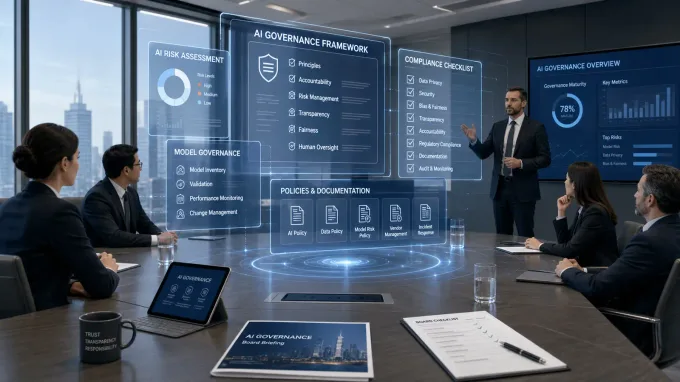
How large organisations structure AI governance: tiered risk classification, accountable owners, model cards and documentation, vendor and API controls, the frameworks they use (NIST AI RMF, ISO/IEC 42001) and the key regulatory dates under the EU AI Act, Colorado's AI Act and California's ADMT rules.
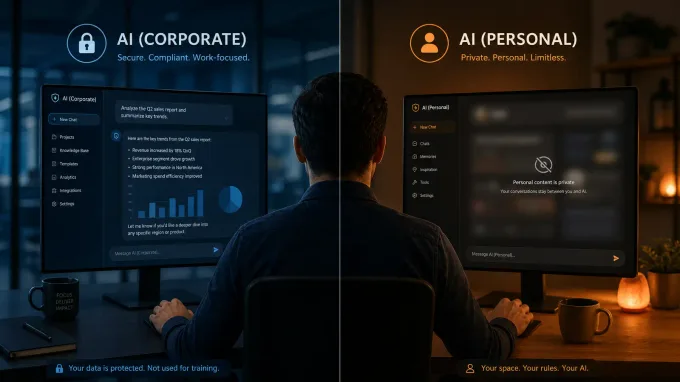
BlackFog's shadow AI research found 86% of employees use AI weekly and 49% use tools their employer has not approved, with many sharing sensitive data. What drives shadow AI, why bans backfire, and a practical governance framework using NIST AI RMF, approved tools, DLP and fast approval paths.
Adobe's 2026 survey of 7,000 people reveals a growing gap between what agentic AI can deliver and what enterprises are structurally ready to deploy. Here is how leading companies are closing it.
A June 2026 Nature Medicine study found three frontier LLMs outscored two specialized clinical AI tools on MedQA, HealthBench and real clinician queries. The results, the vendor pushback including a retraction demand, and what it means for enterprises choosing general models versus specialist AI.
What Glean's Work AI Index: UK 2026 found about botsitting (5.8 hours a week supplying context to and checking AI tools, 36% of sessions failing), related research on workslop and METR's developer study, why supervision eats productivity gains, and practical steps to reduce it.
Atomicwork and NiCE both launched platforms on June 9, 2026 that manage AI agents like staff, with job roles, budgets, scoped permissions and audit trails. What each announced, what is vendor-claimed, and the questions IT leaders should ask before deploying AI coworkers.
How to measure AI ROI in 2026: spending versus realized returns, what controlled studies show about productivity and quality, five dimensions of value, total cost of ownership, and a step-by-step measurement template.
A practical guide to retrieval-augmented generation: how RAG grounds language models in your documents, chunking, hybrid search and re-ranking, agentic and graph-based variants, how to evaluate faithfulness, security and access control, and how RAG compares with long context windows and fine-tuning.
How open-weight models such as Llama, DeepSeek, Qwen, Mistral and gpt-oss compare with proprietary APIs: what the OSI's open source AI definition requires, how licences differ, how big the performance gap is, the real costs of self-hosting and a framework for choosing.
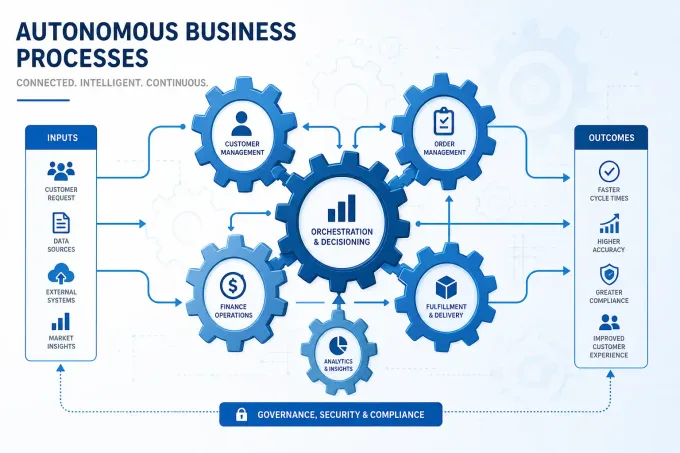
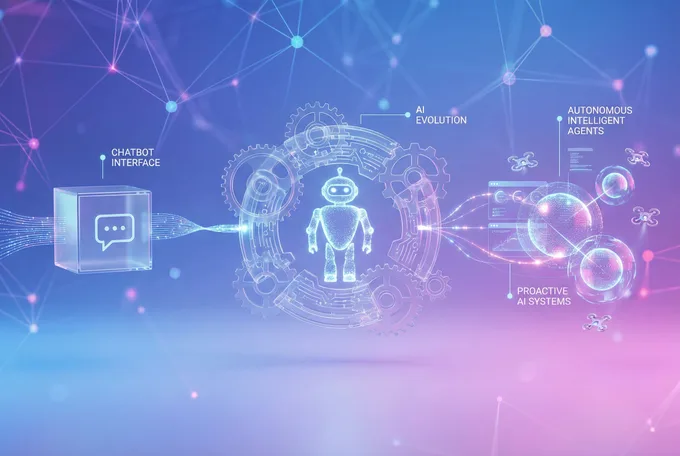
The shift from prompt-and-respond chatbots to goal-driven autonomous agents is reshaping enterprise workflows. Here's what changed, what's working in production, and what still breaks.
Discover how AI search optimization, answer engine optimization (AEO), and Web3 infrastructure are reshaping business models in 2026. Learn practical strategies for CEOs and digital leaders to scale profitably in the AI-driven economy.
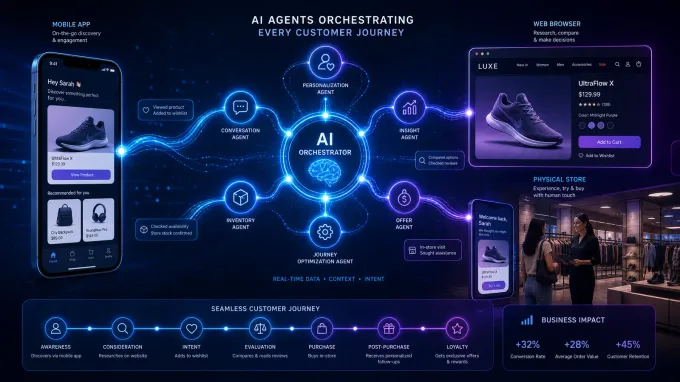
AI agents moved from pilots toward production in 2026, but governance and operating models lag. Market forecasts from Deloitte, Capgemini's findings on trust and autonomy, seven trends shaping enterprise automation, and practical steps for deploying agents responsibly.
Where AI and blockchain genuinely complement each other in 2026: audit trails for AI agents, tokenized securities such as DTCC's new service, stablecoin payments, supply chain provenance and data sharing. Use cases, limits and how to judge whether a project needs both.
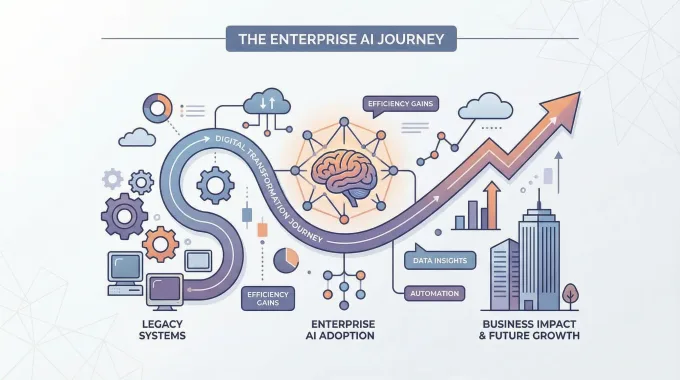
The era of AI pilots is over. Learn how leading organizations are moving from experimentation to production-grade AI deployment, achieving measurable ROI, and building competitive advantages that reshape their industries.