OpenAI Launches Images 2.6 With Flare and Sunburst Tiers
OpenAI released Images 2.6 with GPT-Image-2.6 Flare and Sunburst, adding native GIF animation, API photo markup, SVG exports, and faster generation.
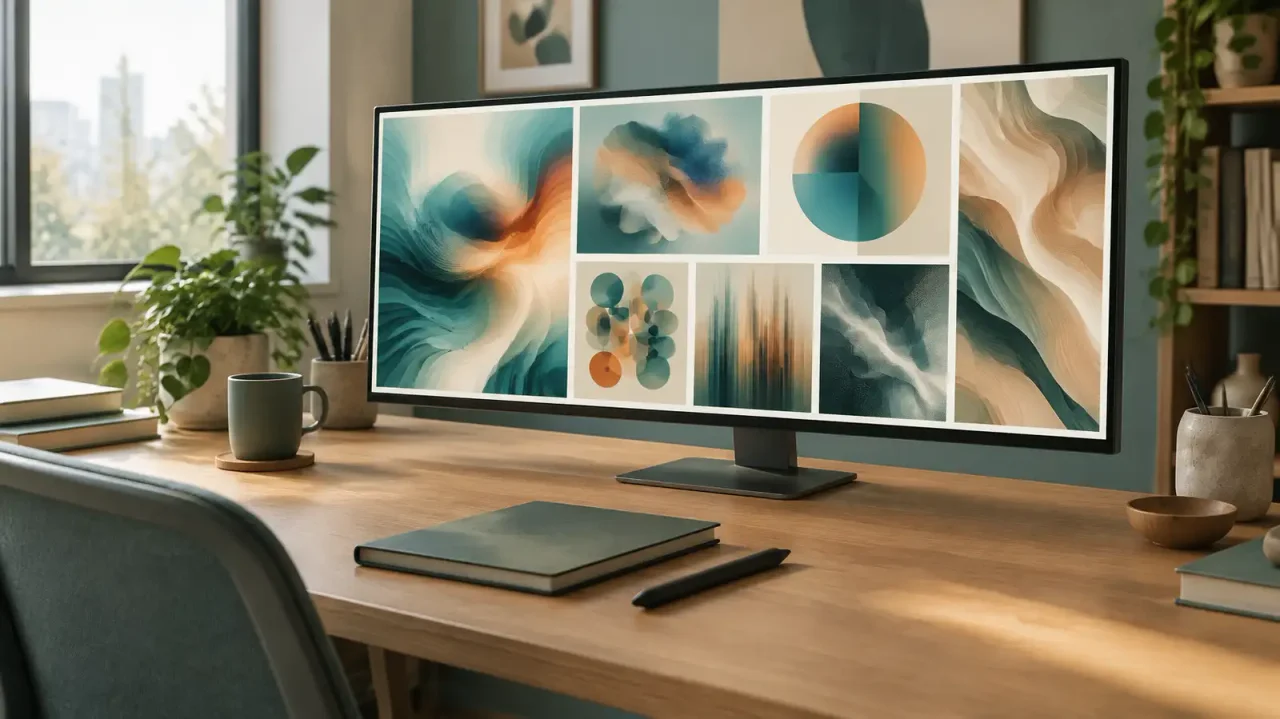
OpenAI launched Images 2.6 on November 4, 2026, introducing architectural and functional updates across ChatGPT, Codex, and the developer API. According to the official Images 2.6 release announcement, the platform now generates imagery up to 50 percent faster than its predecessor while dividing developer access into two distinct models: GPT-Image-2.6 Flare and GPT-Image-2.6 Sunburst. Alongside the raw performance gains, the release adds native animated GIF creation, transparent photo markup controls for targeted edits, vector SVG export options, and a persistent reference image system designed to preserve subject consistency across separate conversations.
The release reflects a structural adjustment in how foundation model providers serve visual media. Early generative art tools delivered one large model intended to handle every request, forcing creators to accept slow generation speeds even when producing basic thumbnail concepts. By splitting the generation layer into a fast drafting model and a heavy composition model, OpenAI provides developers with explicit levers to balance rendering latency against graphic detail.
Dual model rollout separates drafting from precision
The central technical change in Images 2.6 is the separation of developer endpoints into two specialized model variants. Rather than maintaining a single monolithic model for all rendering tasks, the API now routes requests to either GPT-Image-2.6 Flare or GPT-Image-2.6 Sunburst based on the developer’s operational priorities.
GPT-Image-2.6 Flare focuses on low latency and rapid ideation. When set to low quality, Flare completes a generation in as little as 6 seconds. The model includes targeted adjustments for visual layout, allowing graphic designers to test poster structures, packaging concepts, and product arrangements without waiting for full diffusion passes. During exploratory design phases, creative teams often cycle through dozens of compositional variants before selecting a direction. Flare reduces the wait time between iterations, making conversational visual brainstorming practical inside chat interfaces and integrated development environments.
GPT-Image-2.6 Sunburst addresses multi-step fidelity, complex scenes, and dense typographic placement. When users request detailed architectural views, crowded scene compositions, or specific multi-paragraph text elements within an image, Sunburst executes more extensive spatial planning. The model maintains subject consistency across sequential edit passes, preventing the visual drift that often degraded earlier generative workflows. When compared to the editing behaviors detailed in our review of ChatGPT Images 2.5 edit consistency, Sunburst demonstrates greater tolerance for repeated modifications, retaining background details and facial structures while isolating changes to specified regions.
Developers select between these models depending on the user experience they need to build. A conversational assistant generating quick presentation visuals can route queries to Flare to minimize interface lag. Conversely, an enterprise catalog production pipeline preparing final marketing banners can route requests to Sunburst, accepting longer execution times in exchange for crisp vector typography and exact object placement.
Native looping animation without video diffusion overhead
One of the most visible additions in Images 2.6 is direct support for animated GIF generation. Both ChatGPT subscribers and API developers can produce looping animations from text prompts, sketches, or existing static photographs. Inside ChatGPT, users can inspect and edit individual animation frames, adjusting specific elements or motion timing directly within the interface.
Building short animations through image generation models represents a different technical path than running full video diffusion models. Video foundation models process temporal consistency across full video clips, which requires substantial compute clusters, high memory footprints, and extended rendering times. For lightweight animations, such as interface loading states, social media reaction stickers, animated mascots, or digital banner loops, full video diffusion often proves too expensive and slow for real-time applications.
Images 2.6 resolves this constraint by compiling sequential frame grids directly within the image generator’s spatial representation. By generating coherent motion frames in a coordinated pass, the model preserves character proportions and line weights without running a multi-second video inference pipeline. A marketing team can supply an illustration of a brand mascot and prompt the model to generate a looping waving animation or a smooth walk cycle.
The feature also operates in reverse through sketch-to-animation workflows. Creators can supply a sequence of rough line drawings, and the model fills in line textures, color palettes, and lighting transitions across the resulting GIF frames. This capability shortens the storyboard testing cycle, giving art directors a way to evaluate motion ideas before committing full 3D rendering or traditional animation hours to a sequence.
Developer controls introduce markup layers and vector exports
The developer API accompanying Images 2.6 introduces structural parameters that provide programmatic control over the generation and editing process. Previous iterations relied heavily on text instructions or crude binary bounding masks to indicate where an image required alterations. In practice, binary masks often produced visible seam lines or mismatched lighting along mask boundaries.
Images 2.6 introduces photo markup support to the API, migrating an interactive editing paradigm originally developed for ChatGPT into backend workflows. Developers can now pass transparent annotation layers over an existing image to designate exact modification zones. Instead of relying purely on natural language descriptions to specify which object to alter, an application can send a highlighted overlay indicating a specific coffee cup, clothing item, or background sign. The model interprets the markup layer as a spatial constraint, restricting modifications to the designated area while matching the perspective, shadows, and color temperature of the surrounding scene.
The update also adds native support for SVG vector export formats directly from API endpoints. For web designers and digital illustrators, standard raster files like JPEG and PNG present scaling challenges on high-density displays and responsive layouts. By outputting vector paths for icons, brand marks, and stylized illustrations, Images 2.6 outputs files that front-end teams can embed directly into codebases without manual vector tracing.
To give developers finer control over compute consumption, OpenAI added a dedicated complexity parameter that functions independently from the existing quality settings. The complexity parameter accepts values of low, medium, and high, dictating how much pre-generation planning the model performs before laying down pixels:
The low setting accelerates localized edits, such as replacing a product label or recoloring a wall, where the overall scene geometry remains untouched. The medium setting provides balanced reasoning for standard single-subject prompts. The high setting instructs the model to calculate spatial relationships, text layout geometry, and multi-object occlusion before rendering, which is essential for detailed posters, diagrams, and complex packaging designs.
Persistent reference libraries stabilize character generation
Visual drift across conversational turns has been a persistent obstacle in generative image production. When creators produce graphic novels, storyboards, or brand campaigns, they require characters and objects to maintain identical physical traits across different poses, lighting conditions, and camera angles. In earlier tools, maintaining consistency required users to paste reference images into every prompt or construct elaborate prompt preambles describing exact hair colors, clothing textures, and facial features.
Images 2.6 addresses this issue by integrating a persistent reference library into ChatGPT. Users can upload and tag reference assets, including characters, pets, brand guidelines, and product packaging, storing them within their account environment. When drafting new scenes, users cite the stored reference name directly in the prompt. The system injects the visual identity embeddings into the generation pipeline, maintaining facial contours, clothing details, and brand colors across multiple sessions without repeated file uploads.
This memory-driven workflow complements the broader industry methods analyzed in our guide on consistent AI character design methods. While external workflows often rely on custom LoRA training or multi-step seed fixing in local tools like ComfyUI, native reference storage brings consistent asset reuse to non-technical creative professionals who work primarily inside chat interfaces.
The reference library also functions during iterative refinement. If an art director establishes an approved version of a digital protagonist in one conversation, that character model can be recalled days later in an entirely separate project thread. The model preserves the core stylistic parameters, allowing production teams to build coherent image sequences for marketing collateral or story pitch decks without rebuilding the asset from scratch.
Unit economics and token billing structures
Deploying generative visuals in production software requires careful tracking of infrastructure expenses. With Images 2.6, OpenAI maintains its token-based billing architecture while introducing new cost dynamics linked to model selection and output formats.
According to OpenAI’s published Flare model documentation, base token rates for the GPT-Image-2.6 family remain structured around input and output modalities:
Text input costs $5.00 per 1 million tokens, with cached text input priced at $1.25 per 1 million tokens. Image input costs $8.00 per 1 million tokens, with cached image input priced at $2.00 per 1 million tokens. Generated image output costs $30.00 per 1 million tokens across both Flare and Sunburst.
While the nominal token rates are identical between the two models, the operational cost differs based on generation parameters and token volume consumption. GPT-Image-2.6 Flare processes prompts with lower intermediate token counts, particularly when developers set the quality parameter to low or medium. This allows consumer-facing applications to generate exploratory visual concepts at a fraction of the cost required for high-resolution marketing assets.
When developers select GPT-Image-2.6 Sunburst at medium or high quality tiers, the model allocates larger token budgets to spatial planning, typographic consistency, and multi-round state preservation. The resulting cost per image rises accordingly, reflecting the higher compute demand. For high-volume generation pipelines, selecting the correct quality tier is critical to maintaining margins, a trade-off similar to the unit economic considerations discussed in our analysis of Krea 3 generation costs.
Vector SVG exports and multi-frame GIF generations introduce additional billing variables. Generating a multi-frame animated GIF consumes substantially more output tokens than a single static PNG image, as the model must compute temporal frame transitions and pack the resulting sequence into the final container. Teams integrating animated GIF generation into social media bots or customer service avatars must account for this multiplier when forecasting operational costs.
Editorial analysis on commercial design pipelines
The release of Images 2.6 signals an important maturation phase for generative design tools. During the initial wave of AI image generation, product evaluation centered almost exclusively on aesthetic novelty and photorealistic textures. Models were judged by whether they could produce a convincing portrait or a dramatic fantasy scenery from a single poetic prompt.
In commercial design departments, pure generation capability has rarely been the primary bottleneck. Professional designers spend far more time adjusting existing compositions, aligning typographic elements, updating color palettes, and exporting assets into production formats than they spend creating raw concepts from scratch. A tool that produces an extraordinary image but cannot reliably edit a single background element without scrambling the rest of the composition creates friction in professional workflows.
Images 2.6 directly targets these operational friction points. The addition of photo markup endpoints acknowledges that professional creative direction is spatial rather than purely linguistic. Art directors communicate visual corrections by circling an area on a canvas, not by composing descriptive paragraphs about where an object sits relative to the frame. By accepting transparent markup layers programmatically, OpenAI allows software developers to build intuitive visual editing tools on top of foundation models.
The split between Flare and Sunburst also reflects a realistic view of how creative teams operate. Rapid brainstorming requires immediate feedback, where a six-second turnaround allows a designer to explore dozens of layout ideas in minutes. Once an idea receives approval, the workflow transitions to precision production, where a team will happily wait twenty seconds for Sunburst to calculate crisp vector typography and render complex lighting interactions.
There are still practical limitations that creative studios must navigate. Looping GIF generation, while efficient for short web assets, cannot replace dedicated 3D animation suites or frame-by-frame character rigs when complex narrative motion is required. Furthermore, the reliance on cloud API endpoints introduces latency and recurring token costs that contrast with local open-weights pipelines where studios control their hardware infrastructure.
Nevertheless, Images 2.6 establishes a more practical foundation for digital art production. By pairing faster base generation with targeted markup editing, persistent reference memory, and clear operational tiers, the update moves generative visuals closer to standard enterprise software pipelines. Creative teams that structure their workflows around these tiered capabilities can accelerate their design cycles while maintaining strict control over visual consistency.