Generative AI in Advertising: Where It Pays Off, Notable Campaigns, Consumer Attitudes and the Rules on Disclosure
How brands and agencies use generative AI for ad creative: variant production, personalisation and platform tools like Advantage+ and Performance Max, IAB data on adoption and consumer skepticism, campaigns that drew backlash, and the FTC, EU AI Act and ASA rules that apply.
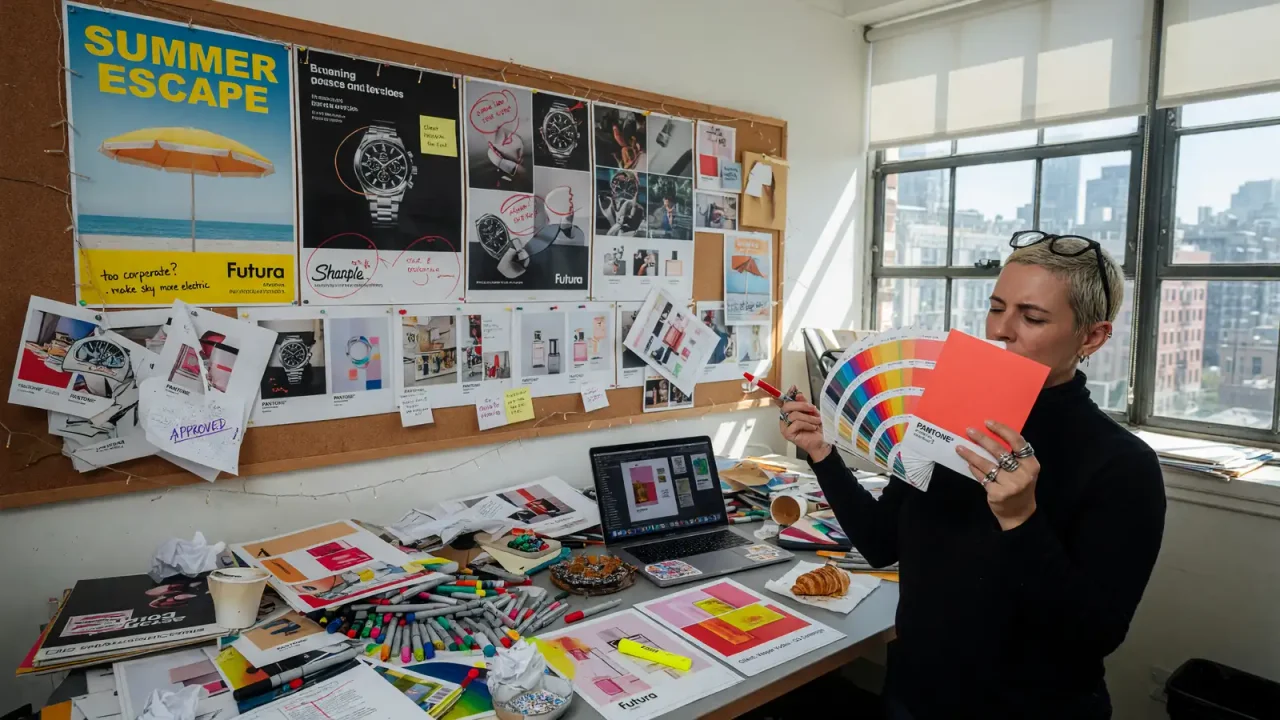
Generative AI is now routine in advertising production. In an IAB and Sonata Insights survey published in January 2026, 83% of ad executives said their company had deployed AI in the creative process, up from 60% in 2024 (IAB). The clearest returns come from producing and testing many variants, localising assets and resizing for channels. Hero brand work is riskier: the same survey found Gen Z and Millennial consumers feel less positive about AI-generated ads than executives think, and several high-profile AI campaigns drew backlash. This guide covers where AI helps, what consumers think and the rules that apply.
Where AI is used in the ad pipeline
| Stage | Typical AI use | Value | Risks |
|---|---|---|---|
| Ideation | Brainstorming concepts, mood boards, scripts | Faster exploration | Generic ideas; need for strong human direction |
| Production | Images, copy, voiceover, video clips | Lower cost per asset, especially for variants | Quality control; likeness and IP issues |
| Versioning and localisation | Resizing, translating, adapting for channels and markets | Large time savings at scale | Translation errors; cultural missteps |
| Testing and optimisation | Platform tools generating and testing variants | Continuous improvement from performance data | Brand drift; less control over what runs |
| Personalisation | Tailoring creative to audience segments | Relevance | Privacy concerns; homogenised brand expression |
The IAB study found advertisers most likely to use AI for social media ads (85%) and display (73%), with 56% using it for TV ads and 42% for audio. Cost efficiency was the top cited benefit in 2026, named by 64% of respondents.
Tools and platforms
Ad platforms’ built-in tools. Google’s Performance Max and Meta’s Advantage+ (Meta) can generate asset variations and automatically test combinations of creative, audiences and placements. For many advertisers, this is where generative AI shows up first, often with little extra effort.
Creative automation platforms. Companies such as Omneky and Pencil, part of The Brandtech Group, generate ad variants from brand guidelines and product information and use performance data to decide which to iterate on. Vendor case studies report cost and speed improvements; treat these as company-reported figures and pilot before committing.
General-purpose generators. Image, video and copy tools are used across agencies for concepts and production, with output adapted in standard design and editing software.
Personalisation: promise and limits
Dynamic creative optimisation, which tailors ads to audience segments, has existed for years but was limited to swapping headlines or product images. Generative AI makes it possible to vary visual style, copy tone and even narrative for different audiences. The benefits depend heavily on data quality and testing discipline, and published uplift figures are usually vendor case studies rather than independent research.
There are trade-offs. Finer personalisation needs more user data, which raises privacy and consent questions under laws such as the GDPR. Heavy optimisation can also flatten a brand’s voice, as every variant converges on whatever the algorithm rewards in the short term. Many brands set guardrails, such as approved visual styles, message hierarchies and banned claims, so that automated variants stay recognisably on-brand.
The agency transformation
Holding companies have built AI platforms for their agencies, and the pitch is usually augmentation: AI handles production, versioning and optimisation, while people handle strategy, creative direction and client relationships. WPP, for example, has invested heavily in AI under its WPP Open platform, and leadership has changed, with Mark Read announcing in June 2025 that he would step down and Cindy Rose becoming chief executive (Wikipedia).
Smaller, AI-native agencies compete on lean teams and lower costs. Pressure on the traditional hourly-billing model is real, and agencies increasingly position themselves around strategy, creative judgement and brand stewardship.
What consumers think
The IAB research, based on more than 500 Gen Z and Millennial consumers and 100 advertising executives, describes a persistent “perception gap”: consumers, especially Gen Z, feel less positive about AI-generated advertising than executives believe. It also found that many consumers said knowing an ad was made with AI would increase their purchase likelihood, suggesting disclosure can help rather than hurt.
Notable campaigns illustrate the risk:
- Toys “R” Us debuted what it called the first commercial made with OpenAI’s Sora in 2024, which drew both attention and criticism (Wikipedia).
- Coca-Cola’s AI-generated holiday ads in 2024 and 2025 got wide coverage and mixed audience reactions, showing that AI-made creative can trigger backlash for brands known for craft.
The lesson is not to avoid AI but to match it to the job. Audiences care less about how a banner variant was produced than about whether a beloved brand’s signature campaign feels made with care.
Rules that apply
- FTC rule on fake reviews and testimonials (2024): bans fake reviews and testimonials, including AI-generated ones, and allows civil penalties (Federal Register).
- EU AI Act Article 50: requires disclosure when content is a deepfake, meaning AI-generated or manipulated content resembling real people, places or events (EU AI Act Article 50).
- UK ASA: the Advertising Standards Authority has said existing rules apply to AI-generated ads, and that AI imagery used to make efficacy claims can mislead if it does not accurately reflect the product, in the same way as filtered or retouched images (ASA).
- Platform policies: Google and Meta require disclosure for digitally altered election and political ads.
- Right of publicity: Using a real person’s face or voice, including a synthetic replica, generally requires consent; some U.S. states have strengthened these laws for digital replicas.
A checklist for marketers
- Start with variant production, localisation and resizing, where returns are clearest.
- Keep human creative direction and final approval for every asset that runs.
- Check product claims: AI images must not exaggerate what the product does.
- Get consent and legal review for any likeness, voice or recognisable style.
- Decide a disclosure policy in advance, especially for realistic people and scenes.
- Measure results against human-made controls, not just production cost.
Our analysis
Generative AI has the clearest return in variant production, localisation and testing, where the volume of assets matters more than any single piece. Hero brand work is riskier: audiences notice and judge it, especially in emotional categories, and survey data shows younger consumers are more skeptical than executives assume. Marketers should keep human creative direction, get legal review for likeness and claims, and treat disclosure as an opportunity to build trust rather than a box to tick.