AI in Game Character Design: Concepting Tools, 2D-to-3D Pipelines, Steam Disclosure and Copyright
How game studios use AI in character design: concept exploration with Scenario, Leonardo and Midjourney's character references, image-to-3D and auto-rigging, what developer surveys say about adoption and sentiment, Steam disclosure and SAG-AFTRA rules, copyright and a responsible pipeline.
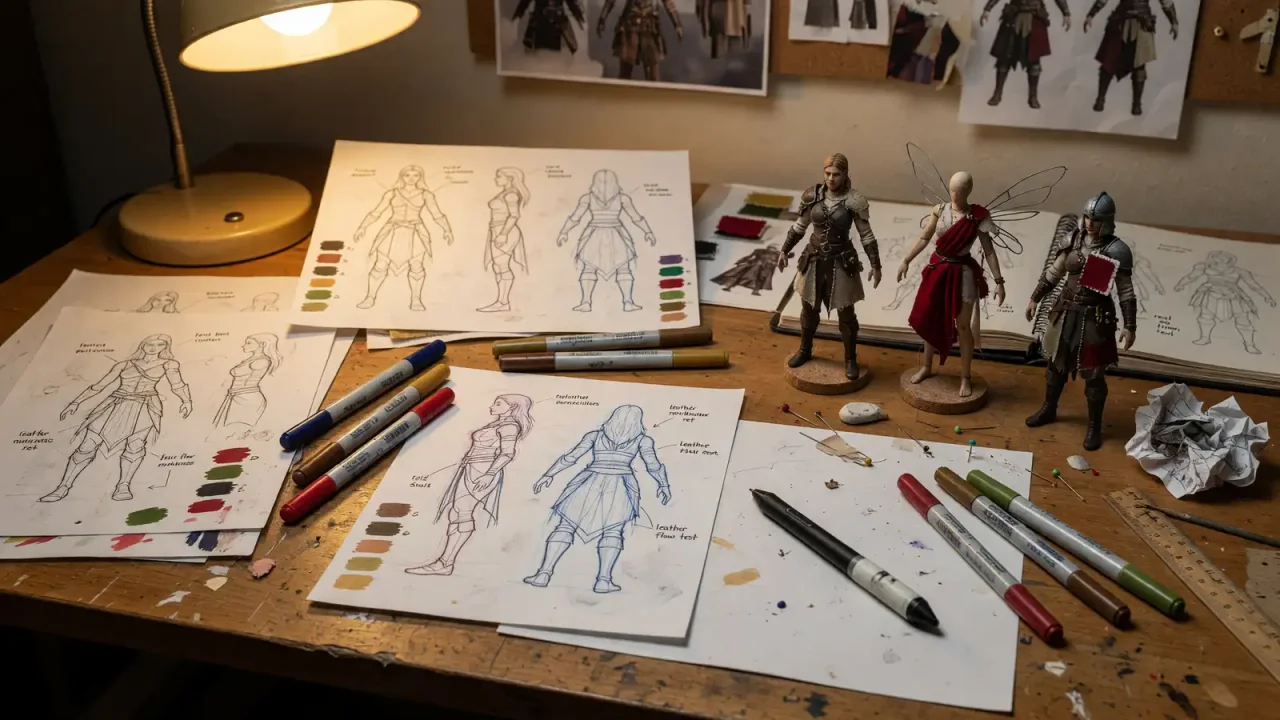
Character design is one of the most labour-intensive parts of game production. A major character can pass through months of concept sketches, sculpting, modelling, texturing, rigging and animation, with many rounds of review. AI tools are now used at several of those stages, most often to explore ideas quickly and to produce rough 3D starting points. They are also controversial among developers, and they come with disclosure, union and copyright obligations. This guide explains where AI fits, which tools studios use and how to adopt them responsibly.
Adoption and sentiment
The GDC’s 2025 State of the Game Industry survey captured both sides. More than half of respondents (52%) said they work for companies that have implemented generative AI, and 36% said they personally use it. At the same time, 30% said they believe generative AI is having a negative impact on the games industry, up 12 percentage points from the previous year. Concept artists and character artists are among those most worried about the effect on their jobs and on the originality of game art.
Concept exploration
The earliest stage of character design involves exploring many visual directions before choosing one. This is where AI is used most.
Custom style models. Scenario is built for game studios and lets them train models on their own art so that generated concepts match an existing visual identity rather than a generic fantasy look. The key requirement is a curated training set the studio owns or has rights to use.
Sketch-guided generation. Tools such as Leonardo AI offer real-time canvases where an artist draws rough shapes and the model renders them into more detailed images while keeping the pose and proportions. The artist decides silhouette and composition; the AI fills in rendering.
Character consistency. Midjourney’s character reference feature lets users supply an image of a character and generate them in new poses, outfits and settings while keeping key features. This helps with pitch decks and mood boards that need to show the same character in several contexts.
In most studios, these images are reference material, not final art. Artists paint over them, combine elements from several and produce final designs by hand, which also strengthens the studio’s copyright position.
From 2D concepts to 3D
Image-to-3D tools can turn a concept image into a textured 3D model in minutes, and some, such as Meshy, include automatic rigging for humanoid and quadruped characters. The results are useful as blockouts for scale and layout tests and as starting points for background characters and creatures. They rarely meet production standards for hero characters: topology is often dense and irregular, UVs and textures may need rebuilding, and facial rigs for expressive animation still require specialists. We cover these tools in more depth in our guide to AI 3D model generation.
Where AI helps and where it does not
| Stage | AI usefulness | Notes |
|---|---|---|
| Mood boards and early ideation | High | Fast variety; risk of generic results |
| Silhouette and costume exploration | Medium to high | Best when guided by artist sketches |
| Final concept art | Low | Usually painted or heavily reworked by artists |
| 3D blockouts and proxies | Medium | Good for scale and layout testing |
| Production models for hero characters | Low | Topology, UVs and rigs need artists |
| Background NPCs and creatures | Medium | Still need cleanup and art direction |
| Voice and performance | Restricted | Subject to union agreements and consent |
The pattern is consistent: AI speeds up the exploratory and repetitive parts, while the decisions that make a character memorable, personality, story, shape language and emotional appeal, remain with designers and artists. Studios that treat AI output as a finished product tend to end up with characters that look like everyone else’s.
Platform rules and disclosure
Game developers using generative AI need to account for storefront and union rules:
- Steam: Valve updated its policy in January 2024 to allow most games that use AI-generated content, provided developers disclose how AI is used in a content survey. Pre-generated content must not be illegal or infringing, and live-generated content requires guardrails. Disclosures appear on the store page. See Valve’s announcement.
- Performers: In the 2024–2025 SAG-AFTRA video game strike, AI protections for voice and motion performers were a central issue; the agreement reached in 2025 includes consent and disclosure requirements for digital replicas. The agreement was ratified on July 9, 2025, ending the strike (Wikipedia summary). Studios using AI-generated voices or likenesses should review the current union terms.
Copyright status of AI-assisted characters
The U.S. Copyright Office’s January 2025 report on copyrightability says prompts alone generally do not give enough control to make the user the author of the output, but human-authored elements—sketches, selection and arrangement, and significant edits—can be protected. For a studio, this means a character whose final design is substantially shaped by artists is on firmer ground than one taken directly from a generator. Keep source sketches and revision history.
Where AI fits in a character pipeline
- Ideation: Rapid mood boards and silhouette variations early in pre-production.
- Reference and paint-overs: Artists paint over generated images to establish costume or colour directions, then produce final designs by hand.
- 3D blockouts: Image-to-3D tools create rough proxies; final game-ready models typically still need retopology, rigging and hand-authored textures.
- Consistency: Style-reference features and custom models trained on the studio’s own art help keep a cast visually coherent.
Copyright status of AI-assisted characters
The U.S. Copyright Office’s January 2025 report on copyrightability says prompts alone generally do not give enough control to make the user the author of the output, but human-authored elements such as sketches, selection and arrangement and significant edits can be protected. A character whose final design is substantially shaped by artists is therefore on firmer ground than one taken directly from a generator. Keep source sketches and revision history.
Practical cautions
Avoid prompting with the names of living artists or existing franchises, check each tool’s terms for commercial use and for training on uploaded art, and keep an internal log of which assets involved AI so that store disclosures stay accurate. Talk to your art team before introducing AI tools, since many developers are sceptical and adoption without consultation can damage trust inside the studio and with players.
Our analysis
AI has found a real but limited place in game character design: fast exploration, consistency within a studio’s own style and rough 3D starting points. It has not replaced the artists who give characters personality and polish, and developer sentiment shows growing unease about its effects. Studios get the most from these tools when they train on art they own, keep artists in control of final designs, document AI use for Steam disclosures and respect performers’ rights under union agreements.