Google Just Made Gemini's AI Image Generator Free — Here's What Changes for Creators
Gemini's personalized Nano Banana-powered image generation is now free for all US users. The move signals a broader shift in how AI art tools compete, and it has real implications for independent creators.
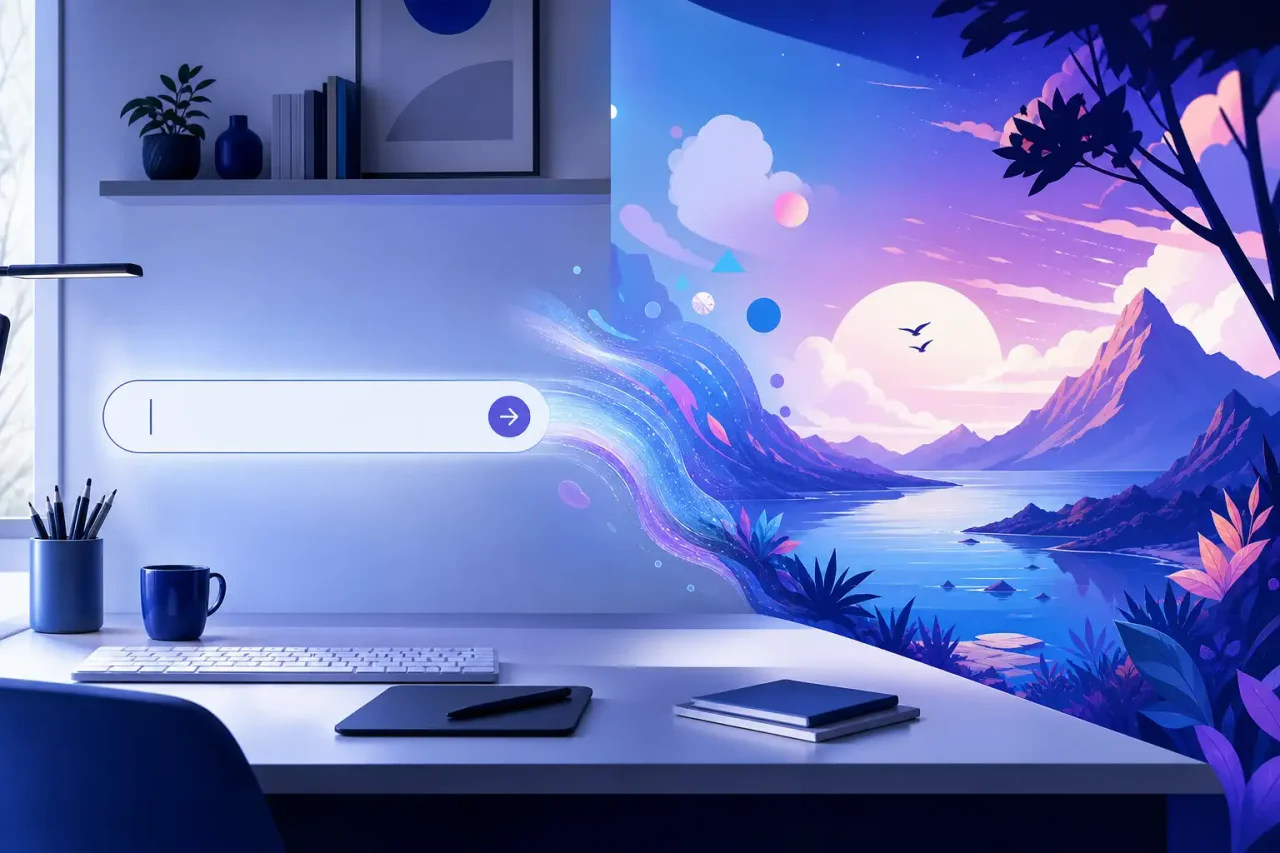
Google announced on Monday that Gemini’s personalized AI image generation feature is now free for all eligible users in the United States. Powered by what Google calls Nano Banana technology, the feature takes text prompts and produces custom images directly within the Gemini app — no subscription, no credit system, no waiting list.
The announcement matters for reasons that go beyond Google’s product roadmap. It reshapes the competitive landscape for AI art tools, puts pressure on Midjourney and OpenAI’s image tools, and radically lowers the barrier for casual creators who have been watching from the sidelines.
What the free tier actually includes
The free access covers personalized image generation within the Gemini app. Users describe what they want in natural language, and Gemini produces an image. The “personalized” component refers to Gemini’s opt-in Personal Intelligence, which can draw on connected Google apps—such as Gmail, Google Photos, YouTube, and Search—so images can reflect a user’s interests or include their own photos without manual uploads.
Google has not published a fixed daily limit for free generations in its announcement; usage limits can vary, so check the Gemini Apps help center for current details.
What this does to the competitive landscape
Midjourney currently starts at $10 per month. ChatGPT offers image generation on its free plan with tighter limits than paid plans. Adobe Firefly ties its free tier to a limited number of monthly credits. Google just undercut all of them by making the core feature free.
The playbook is familiar. Google uses free access to build user habits and gather training data, then monetizes through premium tiers, enterprise licensing, or integration with Google Cloud. The same pattern played out with Gmail, Google Docs, and Google Photos. AI image generation appears to be following the same trajectory.
For independent creators — the freelancers, small business owners, and social media managers who need occasional images but cannot justify a monthly subscription — free access to a capable AI image generator changes the math. The tool that costs nothing and works inside an app they already have will win their attention by default.
The limitations that still matter
Free does not mean unlimited, and it does not mean unrestricted. Google’s content policy prohibits generating images of public figures, copyrighted characters, and certain categories of explicit content. The filters are aggressive, and they occasionally block prompts that are entirely benign.
Output quality is well suited to simple compositions, personal illustrations, and social media graphics; for demanding photorealism or complex scenes, compare results against other tools on your own prompts. For professional work that demands precise control, paid tools still hold an edge.
Resolution also matters. Free-tier outputs are optimized for screen viewing, not print. Creators who need images for physical products, large-format displays, or high-DPI print will find the free tier insufficient and will need to upgrade or switch tools.
What Google actually announced
According to Google’s announcement on June 29, 2026, personalized image generation in the Gemini app—previously limited to Google AI Plus, Pro, and Ultra subscribers—is now available free to all eligible U.S. users. The feature connects Gemini’s opt-in Personal Intelligence with Nano Banana and Google Photos, so prompts like “create an illustration of me and my favorite things” can draw on context from connected Google apps such as Gmail, Google Photos, YouTube, and Search instead of requiring the user to spell out details (TechCrunch; The Verge).
Eligibility and limits from Google’s help pages
Google’s Gemini Apps help article on image generation lists several conditions:
- Users must be signed in with a personal Google account; work and school accounts may have different terms.
- Image generation requires users to be 13 or older (or the applicable age in their country); image editing and Personal Intelligence–connected image features require users to be 18 or older in the U.S.
- Free users can download images at 1K resolution, while Google AI plan subscribers can download at 2K. Subscribers also get access to Nano Banana Pro for regenerating images with more detail.
- Engadget reported that Google Photos connectivity with Gemini is not available in Texas or Illinois because of state privacy laws (Engadget).
Privacy considerations
Because the feature can use real photos of you and information from your accounts, review which apps are connected before using it. Google says connecting apps is opt-in and adjustable in settings, and Personal Intelligence can be switched off per prompt through the Tools menu. Avoid generating images of other people without their consent, and remember that Google’s Prohibited Use Policy still applies to everything you create.
How it compares
- ChatGPT: Image generation is available on free and paid ChatGPT plans, with higher limits on paid tiers.
- Midjourney: Subscription-only, with plans starting at $10 per month.
- Adobe Firefly: Uses a monthly generative-credit system, with a limited free allowance.
For casual, personal images the free Gemini option is now hard to beat on price; for print-quality output or professional style control, paid tools still offer more.
What this means for the broader AI art conversation
Every time a major AI art tool drops its price, the same debates resurface. Artists ask whether their work is being used to train models without consent. Copyright lawyers point out that US law still has not settled the question of whether AI-generated images can be copyrighted. And platforms like DeviantArt and ArtStation continue to grapple with how to handle an influx of AI-generated content alongside human-made work.
Google’s move to free does not resolve any of those questions. It amplifies them. When millions more people gain access to AI image generation, the volume of AI-generated images online increases, the distinction between human and machine-made work blurs further, and the economic pressure on commercial illustrators and stock photographers intensifies.
The tool is free. The broader consequences are anything but.