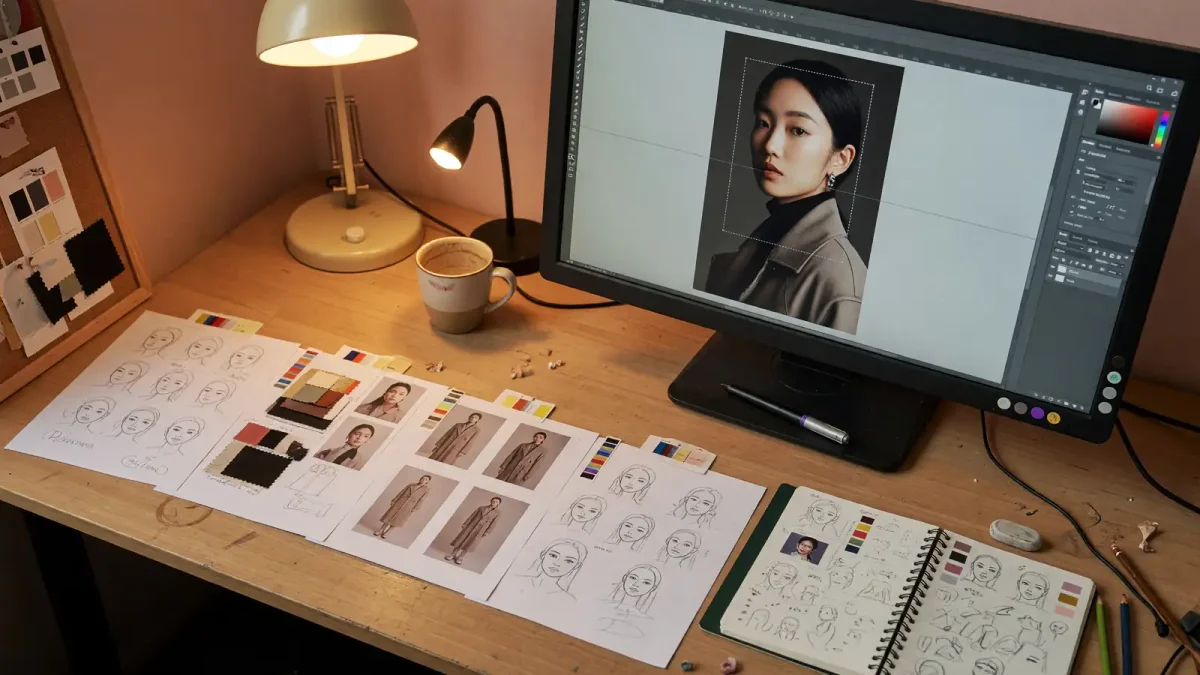
OpenAI did not ship a new aesthetic on September 8. It shipped a claim that the tenth edit will still look like the first subject. The company post puts ChatGPT Images 2.5 on every ChatGPT tier, including Work and Codex, on desktop, mobile, and web. The API names are GPT-Image-2.5 Sunburst and GPT-Image-2.5 Flare. The volume number is the one they wanted in the headline: more than 3 billion images a week across ChatGPT Images and the GPT-Image models.
9to5Mac’s same-day recap is useful because it places the release. Images 2 landed in April with 2K output, aspect ratios, web research, and Instant versus Thinking. Five months later, 2.5 sells lighting, texture, reference-photo preservation, and up to 50% less wait than 2.0. It also sells Sketch, templates, and prompt sharing. Astra had landed the week before. This is the picture half of that news cycle.
Two days later, Laurent Picard published a Gemini Nano Banana pipeline that does the unglamorous version of the same job in Python: pin a character sheet, pin the last frame, describe only the change. If you make pictures for a living, the comparison is not “which model is prettier.” It is whether you want that discipline inside a chat thread or inside a repo.
What 2.5 actually asserts
Sharper details and richer textures are marketing until you keep a file. The operational claims are smaller.
Multi-turn editing: later instructions should not wash out earlier ones. OpenAI says that matters in production because you can change a sleeve without rebuilding the campaign hero. Anyone who has watched a face drift across eight Midjourney variations already knows why that sentence exists.
Latency: up to 50% faster than Images 2.0. “Up to” is doing work. Still, if you iterate in chat, wait time is the tax you pay for not opening ComfyUI.
Reference preservation: 9to5Mac quotes OpenAI on keeping subjects from your photos. That is the product-shot problem and the character-sheet problem in one line.
Sketch: draw in ChatGPT instead of describing a layout you cannot name. Templates and shared prompts are distribution features. They will matter to people who teach prompts. They will not save a bad edit model.
Safety stack: C2PA metadata and an invisible watermark, plus the usual prompt and image checks. We already covered provenance tooling. Watermarking is not a license. It is a label. Keep your own records anyway.
What OpenAI did not put in the launch post, at least in the chunks that matter for a working artist: a public Elo chart against Midjourney V8, a side-by-side with Nano Banana Pro on typography, or a price table in the same URL. Sunburst and Flare have a pricing page of their own. Read that before you budget a campaign, not this paragraph.
Images 2 already had Instant and Thinking. 2.5 does not, in the 9to5Mac recap, replace that split with a new philosophy. It claims to be better at the job you were already doing in the same window.
The Nano Banana pipeline is the control group
Picard’s HackerNoon piece is not a model card. It is a working method. You keep assets with IDs. You pass source_ids into generate_content with a model constant he calls NANO_BANANA_MODEL. The prompt is a punch list: Image 1 is the character sheet, Image 2 is the last scene, then a list of diffs. Remove the ice picks. Move the mountain. Add a felt bridge. Put the robot in the center. Maintain the background. Close-up.
That is the opposite of “make it more cinematic.” It is how you stop the model from inventing a new protagonist because you mentioned weather.
He retries. Tenacity, seven attempts, wait that starts at 10 seconds and climbs. That detail is more honest than a latency percentage. Cloud image APIs fail. Your pipeline either expects that or you sit there clicking again.
We ranked character-consistency methods in August. The ranking still holds: a locked sheet plus surgical prompts beats a vibes paragraph. Picard just published the Gemini-flavored implementation. Images 2.5 is OpenAI saying the chat UI will hold the sheet for you if you keep talking in the same thread.
Try that claim. Ten edits on one face, one garment, one logo. If edit six grows a new nose, you do not have a production tool. You have a slot machine with a nicer loading spinner. If edit six only moves the lamp, you can fire the Python babysitter for that client.
Local still exists. PhotoDirector’s IFA local mode is for files that should not leave the machine. 2.5 is a cloud model with a watermark. Do not mix those jobs because the marketing both said “precise editing.”
Where 2.5 fits next to tools you already pay for
Midjourney is still the taste engine for a single hero frame. Nothing in OpenAI’s post tries to steal that sentence. If your art direction lives in --sref and a moodboard, stay there for the key art. Use 2.5 when the client says “make the sky dusk” for the fifth time and you do not want a new composition.
Qwen-Image-3.0, which we called document-first, is still the tool you reach for when the picture is a form, a slide, or a page. OpenAI will say 2.5 is better at infographics in the system card. Trust a real page test, not the card.
Nano Banana in Gemini is the volume path if you already live in Google and you want Picard’s asset graph. The HackerNoon code assumes you will store every frame. ChatGPT’s thread is a worse database than a folder of IDs. If the thread hits a limit, your continuity dies. Export.
Sketch in ChatGPT is for people who can draw a blocking and cannot write “low camera, 35mm, subject left third.” It will not replace a lightbox. It may replace the paragraph you always get wrong.
Prompt sharing is a social feature. Treat shared prompts like shared LUTs. They are a starting point. They are not your character sheet.
Codex in the rollout list is the tell that OpenAI wants this in agent loops, not only in a painter’s afternoon. If your coding agent can call Flare, you will get a lot of images you did not look at. Put a human on the last frame that ships.
A test you can run this week
Pick one character you already use. One reference photo or sheet. One scene.
ChatGPT path. New chat, Images 2.5. Upload the sheet. Generate scene one. Then ten specified edits: sleeve color, lamp position, crop, expression, background only, then reverse the crop. Save every output with a number. Do not start a new chat.
Nano Banana path. Picard’s pattern: sheet + last frame + diff list. Same ten edits. Save with IDs.
Score only what you can see. Did the face hold. Did the logo hold. Did the model ignore “maintain the background.” How many retries. How many minutes. You do not need an arena Elo for that.
If you bill clients, add a fourth column: did the file include C2PA, and does the client care. Some will. Some will ask you to strip it, which you may or may not be able to do. Read the tool, not a Twitter screenshot.
Typography is a separate test. Put a poster title in the frame. If 2.5 still invents letters, you still need Ideogram or a real type tool. Do not forgive bad type because the skin looks better.
Pricing, tiers, and the thing people will skip
All ChatGPT tiers, including free, are on the rollout sentence. That does not mean free users get Flare at API quality in unlimited volume. It means the consumer surface got a model bump. API users get named snapshots. Those are different products that share a family photo.
If you already generate in batch, 50% latency is money even when the per-image price is unchanged. If you generate two pictures a week, you will notice the edits more than the clock.
Do not build a brand system on a preview adjective. Sunburst and Flare will get dated snapshots. Pin the snapshot in code the way Picard pins NANO_BANANA_MODEL. “Latest” is how a campaign drifts in October.
The 3 billion images a week number is OpenAI’s. It tells you the cluster is busy. It does not tell you your picture will be good. Busy clusters also mean more people will use the same default look. If your job is not to look like a ChatGPT default, you still need a sheet, a pipeline, and a no.
Instant, Thinking, and the April leftovers
Images 2.0 was not a toy. 9to5Mac’s recap of April still matters because 2.5 sits on that chassis. 2K output, multiple aspect ratios, web research in the prompt, Instant versus Thinking. If you already learned when to pay for Thinking on a layout that has type, do not throw that habit out because the latency slide said 50%. Fast and sloppy is still sloppy. Use Instant for blocking. Use the slower pass when the sleeve has to match the last frame.
Web research in image gen is a trap for product shots of unreleased hardware. The model will invent a port. Keep the reference photo in the thread and say so. Picard does this with source_ids. You can do it with an upload and the words “use image 1 as the only design.”
Templates will fill with OpenAI’s idea of a YouTube thumbnail. Fine for a joke. Bad for a brand that already has a grid. Shared prompts are the same problem with a nicer URL. Steal the structure, replace the nouns.
Astra in the previous week is why this launch felt like a double feature. Do not conflate a language-model story with an image-model story when you write the client email. They shipped on adjacent days. They do not share a quality slider.
What I would actually switch
I would move client revision rounds that already happen in ChatGPT onto 2.5 this week, because the cost of trying is one thread. I would not move a locked character bible off a Nano Banana or Midjourney pipeline until the ten-edit test passes on that character.
I would keep PhotoDirector local, or whatever local stack you trust, for faces under NDA. I would keep Qwen for documents. I would treat Sketch as a blocking tool, not a finish tool.
And I would steal Picard’s prompt shape even inside ChatGPT. Number the source images. State the diffs. Say “maintain the background.” The model launch is a faster engine. The discipline is still a list.