AI-Powered Predictive Maintenance: How Machine Learning Is Keeping Industrial Systems Running
Unplanned downtime costs manufacturers billions annually. AI-powered predictive maintenance is changing that, using sensor data and machine learning to predict failures before they happen. Here's how the technology works and where it's delivering the biggest returns.
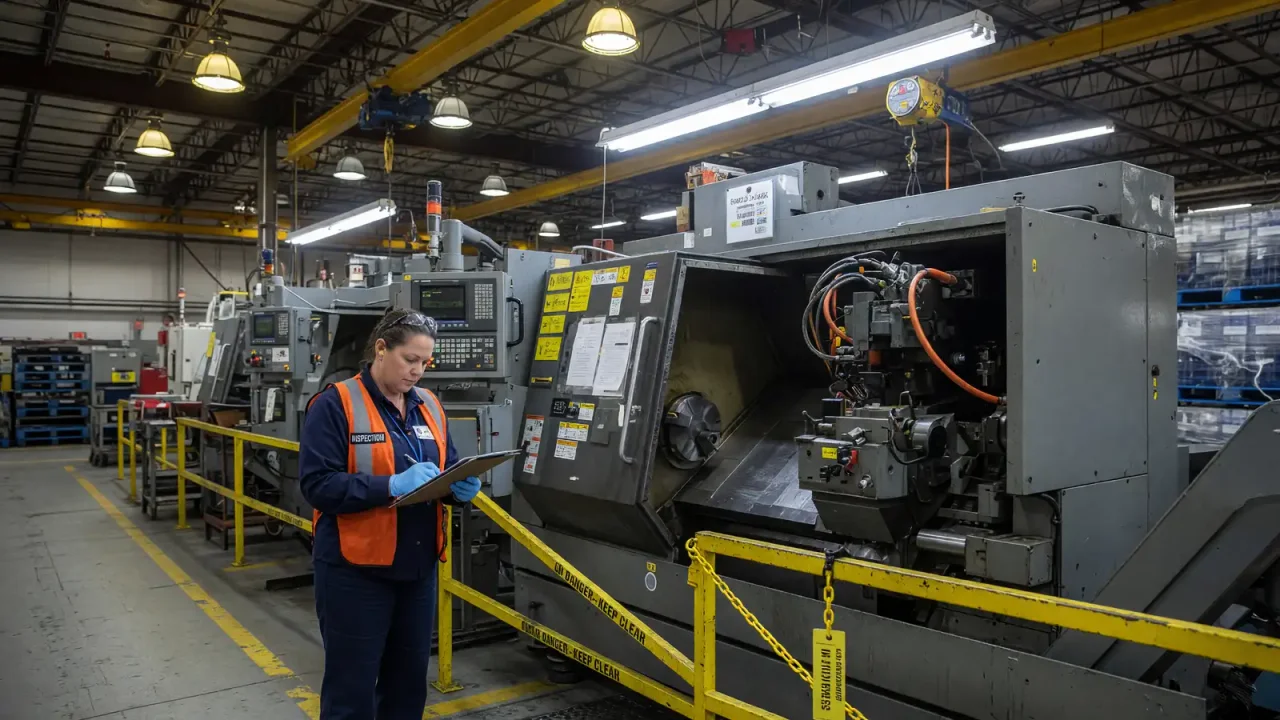
Unplanned equipment downtime costs industrial manufacturers an estimated $50 billion annually in lost production. Traditional maintenance strategies — run to failure (cheap but catastrophic when it happens) or scheduled replacement (safe but wasteful) — leave enormous value on the table. AI-powered predictive maintenance promises a third way: fix things exactly when they need fixing, not before and not after.
How it works
Predictive maintenance AI ingests data from sensors attached to industrial equipment — vibration, temperature, acoustic emissions, oil quality, electrical current — and learns the patterns that precede failures. When those patterns appear in live data, the system alerts maintenance teams with enough lead time to schedule repairs during planned downtime rather than reacting to emergencies.
The machine learning challenge is subtle. Failure patterns are often multivariate and non-obvious: a bearing might fail not because of wear alone, but because of a specific combination of load, temperature, and vibration that occurs only under certain production conditions. Traditional threshold-based monitoring — alert if vibration exceeds X — misses these patterns. Machine learning models that consider dozens of variables simultaneously catch them.
The models also adapt to equipment-specific baselines. A turbine in a desert environment has different normal operating parameters than an identical turbine in a coastal facility. AI models learn these baselines automatically and flag deviations that are anomalous for specific equipment in its specific context — far more precise than generic thresholds.
Proven ROI
The financial case for AI predictive maintenance is compelling and well-documented. Siemens’ Senseye platform, deployed across thousands of facilities, reports 85-95% accuracy in predicting failures 2-4 weeks in advance, reducing unplanned downtime by 30-50% and maintenance costs by 20-30%. For a large manufacturer with $200 million in annual maintenance spend, that’s $40-60 million in direct savings.
Uptake has focused on heavy industry — mining, oil and gas, rail — where equipment failures are both expensive and dangerous. Its platform processes data from thousands of sensors on a single piece of equipment, identifying failure signatures that human analysts would never detect. A mining company using Uptake reported a 45% reduction in haul truck downtime, saving an estimated $25 million annually across its fleet.
GE’s Predix platform takes an asset-lifecycle approach, combining predictive maintenance with performance optimization. The system doesn’t just predict when equipment will fail — it recommends operating parameters that extend equipment life while maintaining throughput. This “prescriptive maintenance” represents the next evolution: not just predicting problems, but preventing them through optimized operation.
The data challenge
The biggest barrier to predictive maintenance AI isn’t the algorithms — it’s the data. Most industrial equipment wasn’t designed with data collection in mind. Retrofitting legacy machinery with sensors is expensive and often impractical. Even when sensors exist, data is frequently siloed in proprietary systems that don’t talk to each other.
The most successful deployments start with the highest-value assets — the equipment whose failure causes the most expensive downtime — and build out from there. A chemical plant might start with its reactor, a mine with its haul trucks, a wind farm with its turbines. Prove ROI on the critical assets, then expand.
Standards and building blocks worth knowing
Predictive maintenance programs rarely start from scratch. Most build on established condition-monitoring practice, and a few standards and public resources are useful reference points:
- ISO 13374 defines a reference architecture for condition monitoring and diagnostics of machines, splitting the pipeline into data acquisition, data manipulation, state detection, health assessment, prognostics, and advisory generation. It is a helpful checklist for deciding which layers a vendor actually covers.
- ISO 17359 gives general guidelines for setting up a condition-monitoring program, including how to select which failure modes and parameters to monitor.
- NASA’s Prognostics Center of Excellence has published widely used public datasets, including the C-MAPSS turbofan engine degradation data, which many teams use to benchmark remaining-useful-life (RUL) models before touching production data. See the NASA Prognostics Data Repository.
Choosing the right modeling approach
Not every asset needs deep learning. In practice, teams usually choose among three approaches:
- Threshold and rule-based monitoring — alarms when vibration, temperature, or current crosses a limit. Simple, explainable, and often enough for non-critical assets.
- Anomaly detection — unsupervised models (for example isolation forests or autoencoders) learn “normal” behavior and flag deviations. Useful when historical failure labels are scarce, which is the common case.
- Remaining-useful-life prediction — supervised or survival models estimate time to failure. These need labeled run-to-failure histories, so they are typically reserved for high-value, well-instrumented equipment.
Where cloud vendors fit
Major cloud providers offer building blocks rather than turnkey answers. AWS, for example, documents industrial anomaly-detection patterns using services such as AWS IoT SiteWise for collecting equipment data, while Microsoft’s Azure IoT documentation covers similar ingestion and analytics architectures. These platforms simplify data collection and storage, but the domain work—choosing sensors, labeling failures, and integrating alerts into maintenance workflows—remains with the operator.
A practical starting checklist
- Pick one asset class with frequent, costly failures and existing sensor data.
- Record maintenance work orders in a structured way so failures can be labeled.
- Start with anomaly detection, then move to RUL models once enough labeled failures accumulate.
- Route alerts into the existing computerized maintenance management system (CMMS) rather than a separate dashboard, so technicians actually act on them.
- Track false alarms as carefully as missed failures; alert fatigue is a common reason programs stall.
The bottom line
Predictive maintenance is one of the most proven, highest-ROI applications of industrial AI. The technology is mature, the economics are clear, and the barriers are organizational and data-related rather than technical. For asset-intensive industries, the question isn’t whether to adopt AI predictive maintenance — it’s how quickly and at what scale.