AI in Fashion Design: How Algorithms Are Transforming the Runway in 2026
How AI is used in fashion in 2026: generative design and copyright limits, Google's virtual try-on, image-based trend forecasting, and demand forecasting as the EU bans destroying unsold textiles.
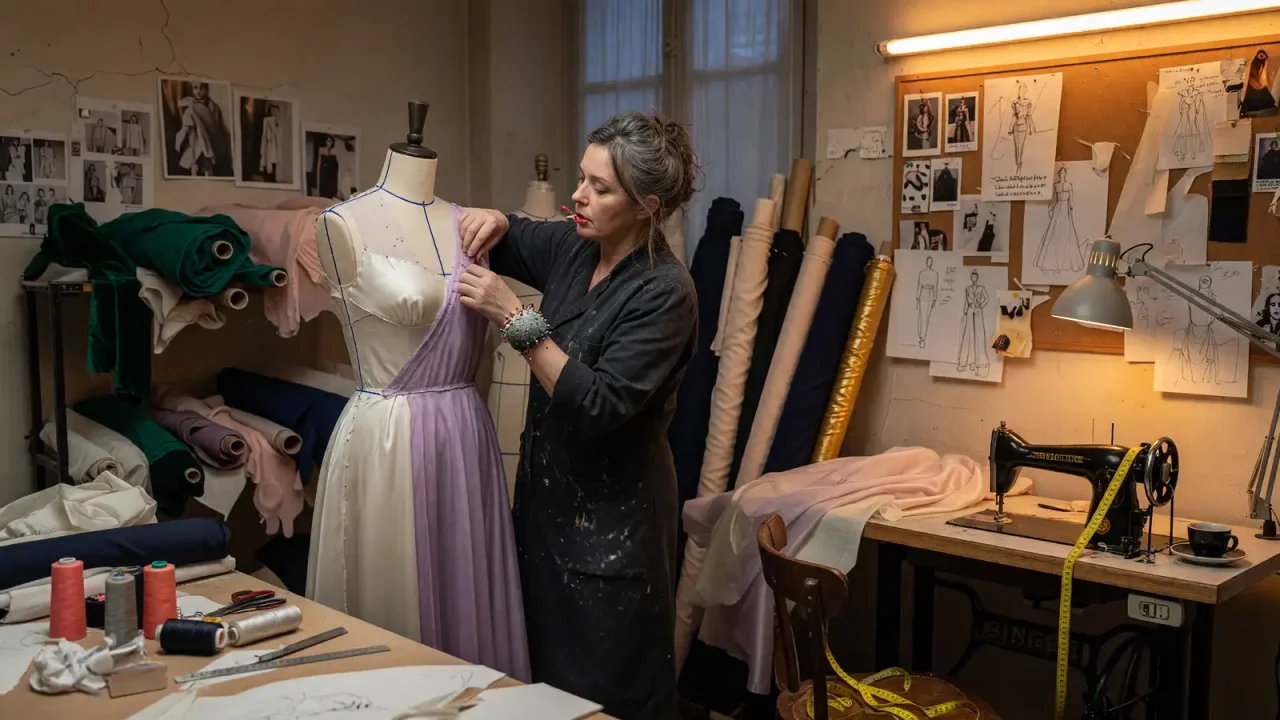
Fashion is adopting AI at several points in its pipeline: generating early design ideas and textile patterns, showing shoppers how clothes look on different bodies, analyzing images to spot trends, and forecasting demand to reduce overproduction. New European rules on unsold textiles are adding regulatory pressure to that last use, while questions about copyright and creative originality shape how designers use generative tools.
This guide reviews where AI is used in fashion, what public sources say about its impact, the legal and creative issues designers face, and how brands can evaluate AI tools.
Design and ideation
Generative image models can produce garment concepts, mood boards, colorways, and seamless textile repeats from text prompts or reference images. Specialist platforms such as Cala (product development) and Refabric (textile and pattern design) focus on fashion workflows, while general image tools are widely used for mood boards.
In practice, these tools work best as ideation aids. A designer can explore many silhouettes or color directions quickly, then select and refine a few. Turning an image into a garment still requires technical design work: pattern drafting, grading across sizes, choosing fabrics with the right weight and drape, and checking construction. Images that look plausible on screen may not be manufacturable.
Copyright and ownership
The U.S. Copyright Office’s report on copyrightability concludes that prompts alone generally do not give a person sufficient control over AI output to make them its author, so purely AI-generated material is not protected by copyright. Human contributions, such as selecting and arranging elements or modifying the output, can be protected. In March 2025, a U.S. federal appeals court in Thaler v. Perlmutter also upheld the requirement of human authorship for copyright registration.
For fashion brands, this matters because a print or graphic generated only from prompts may be difficult to protect against copying. Designers who substantially modify, combine, or redraw AI-generated elements are on firmer ground. Brands should also check whether generated designs resemble existing protected works, logos, or trademarks.
Virtual try-on and fit
Online clothing shopping suffers from uncertainty about fit and appearance, which contributes to returns. Virtual try-on tools aim to reduce that uncertainty.
Google introduced a generative AI virtual try-on feature in Google Shopping that takes a single image of a garment and shows how it would drape, fold, cling, stretch, and form wrinkles and shadows on a diverse set of real models in various poses. Google said it selected models ranging in sizes XXS to 4XL, with different skin tones (using the Monk Skin Tone Scale as a guide), body shapes, ethnicities, and hair types.
This approach shows clothes on people who resemble the shopper rather than on the shopper themselves. Personalized try-on, which builds a model of an individual’s body from photos or scans, is technically harder and raises privacy questions about body images and measurements. Augmented-reality try-on in camera apps works well for accessories such as glasses and shoes but remains less convincing for full garments.
Brands evaluating try-on should measure effects on conversion and returns through controlled tests, since vendor-reported results vary widely.
Trend forecasting
Traditional trend forecasting relies on analysts tracking runways, retail, street style, and culture. AI-based services such as Heuritech analyze large volumes of social media images to detect changes in silhouettes, colors, patterns, and details, and combine these signals with sales and search data.
Image-based forecasting can identify emerging items early, especially in categories where trends spread through social media. Its limits include bias toward visible, online populations; difficulty distinguishing short-lived spikes from lasting trends; and the need for human interpretation about which trends fit a brand.
Demand forecasting and overproduction
Overproduction is one of fashion’s most costly and wasteful problems. The European Commission’s Textiles Strategy states that about 5 million tonnes of clothing are discarded each year in the EU, around 12 kg per person, and that only 1% of material in clothing is recycled into new clothing. The Ellen MacArthur Foundation’s A New Textiles Economy estimates that redesigning how clothes are designed, sold, and used is a USD 500 billion economic opportunity.
New EU rules raise the stakes
According to the Commission’s timeline, a ban on destroying unsold textiles and footwear began on 19 July 2026 for large enterprises and will apply to medium-sized enterprises from 19 July 2030. The strategy also includes ecodesign requirements under the Ecodesign for Sustainable Products Regulation, a planned Digital Product Passport, and mandatory Extended Producer Responsibility schemes for textiles across member states.
These rules make accurate demand forecasting more valuable. If unsold goods cannot simply be destroyed, producing closer to actual demand reduces both waste and the cost of handling excess stock.
How AI helps
- SKU- and store-level forecasting using sales history, seasonality, promotions, weather, and trend signals.
- Size-curve optimization so stores receive the right mix of sizes, reducing leftover stock in unpopular sizes.
- Markdown optimization to sell remaining inventory at the right time and price.
- Made-to-order and small-batch models supported by faster design and digital printing.
Forecasting quality depends heavily on data: clean sales records, accurate inventory, and consistent product attributes. Retailers should evaluate tools against their own historical data before relying on them.
Sustainability claims
AI can help track materials and supply chains, but brands must be careful about environmental claims. The EU’s Empowering Consumers for the Green Transition Directive and proposed Green Claims rules, noted in the Commission’s strategy, target vague or unsubstantiated sustainability claims. Statements that AI made a collection “sustainable” need evidence.
The creative debate
Designers and critics disagree about AI’s creative effects. Critics argue that generative tools trained on existing images push designs toward familiar averages and raise questions about the use of designers’ work in training data without consent. Supporters say AI speeds up mechanical tasks such as exploring colorways and producing repeats, freeing designers to focus on concept and craft.
Both views point to the same practical conclusion: AI is most useful when designers use it to explore options and handle repetitive work, while creative direction, cultural context, and final decisions remain with people.
What changes for design and merchandising teams
AI shifts some work between roles rather than removing it. Designers spend less time producing early variations and more time curating, editing, and translating images into technical specifications. Technical designers and pattern makers become more important, because they turn AI-assisted concepts into garments that fit and can be produced. Merchandisers and planners work more closely with forecasting outputs, deciding when to trust a model’s buy recommendation and when brand knowledge should override it.
Teams adopting these tools benefit from simple shared rules: which tools are approved, what may be uploaded (unreleased designs and supplier data are often confidential), how AI-assisted work is labeled in design files, and who signs off before anything reaches production. Recording those decisions also creates the documentation of human contribution that copyright protection may depend on.
How brands can evaluate AI tools
| Area | Key questions |
|---|---|
| Design tools | Can outputs be edited and exported in usable formats? What data was the model trained on? Who owns outputs? |
| Try-on | Does it reduce returns or increase conversion in A/B tests? How are customer images handled? |
| Trend forecasting | How are signals sourced? How accurate were past forecasts in our categories? |
| Demand forecasting | How does accuracy compare with current methods on our historical data? Does it support size-level planning? |
| Compliance | Does it help meet EU rules on unsold goods and product information? |
A practical roadmap
- Start with demand forecasting if overproduction or EU rules on unsold goods are a concern; it offers the most measurable benefits.
- Use generative tools for ideation, with clear rules on modifying outputs and checking for similarity to existing designs.
- Test try-on in controlled experiments before full rollout.
- Document human contributions to designs to support copyright protection.
- Substantiate sustainability claims with data, not marketing language.
Related coverage
For related topics, see our guides to AI in supply chains and logistics and AI tools for small businesses.
Bottom line
AI is changing fashion through faster ideation, more realistic virtual try-on, image-based trend analysis, and better demand forecasting. The strongest business case is in forecasting and reducing overproduction, especially now that the EU has banned large companies from destroying unsold textiles and footwear. Generative design is most valuable as an ideation tool, and U.S. copyright guidance means purely prompt-generated designs may not be protected. Brands that test tools on their own data, keep designers in charge of creative decisions, and back sustainability claims with evidence will gain the most.
Sources
- European Commission, EU Strategy for Sustainable and Circular Textiles: https://environment.ec.europa.eu/strategy/textiles-strategy_en
- Ellen MacArthur Foundation, A New Textiles Economy (2017): https://www.ellenmacarthurfoundation.org/a-new-textiles-economy
- Google, “Virtually try on clothes with a new AI shopping feature”: https://blog.google/products/shopping/ai-virtual-try-on-google-shopping/
- U.S. Copyright Office, Copyright and Artificial Intelligence: https://www.copyright.gov/ai/
- U.S. Court of Appeals for the D.C. Circuit, Thaler v. Perlmutter (2025): https://media.cadc.uscourts.gov/opinions/docs/2025/03/23-5233.pdf
- Heuritech: https://www.heuritech.com/